


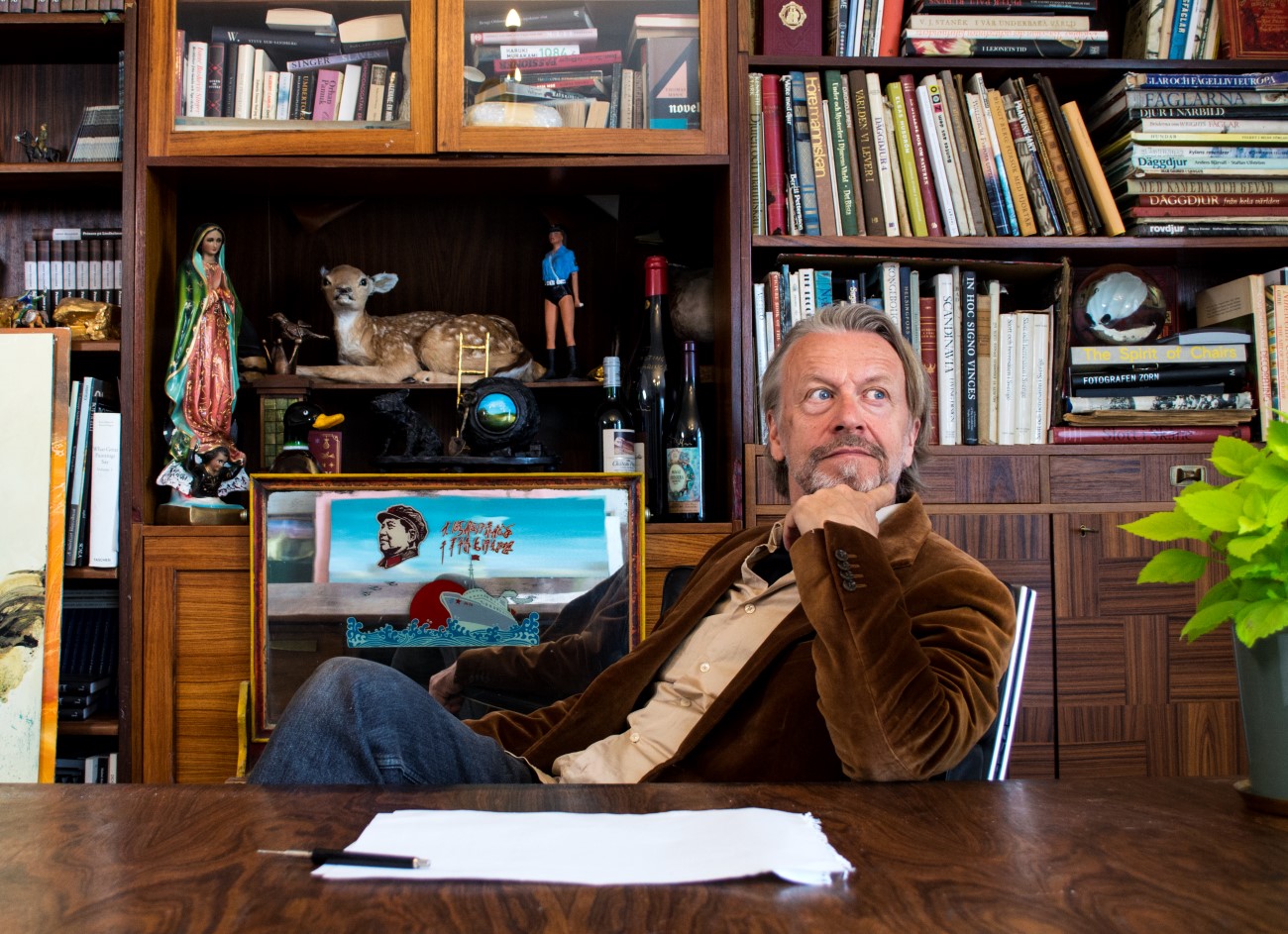
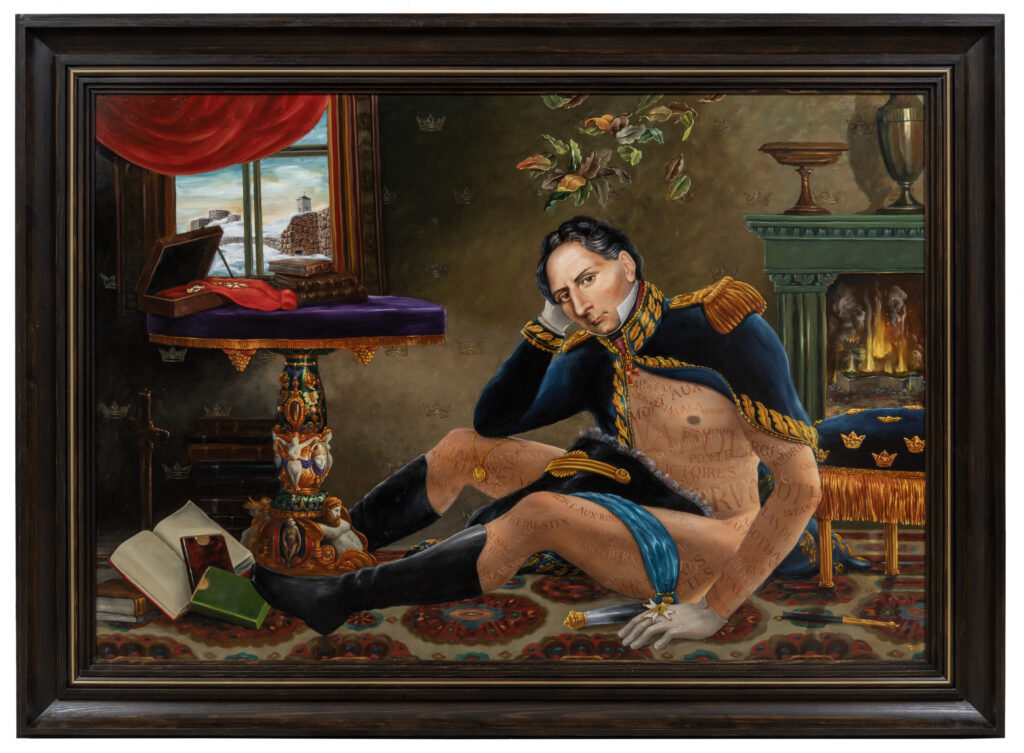
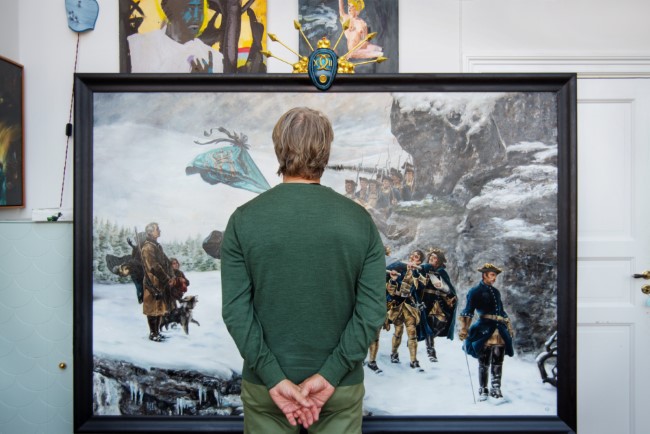
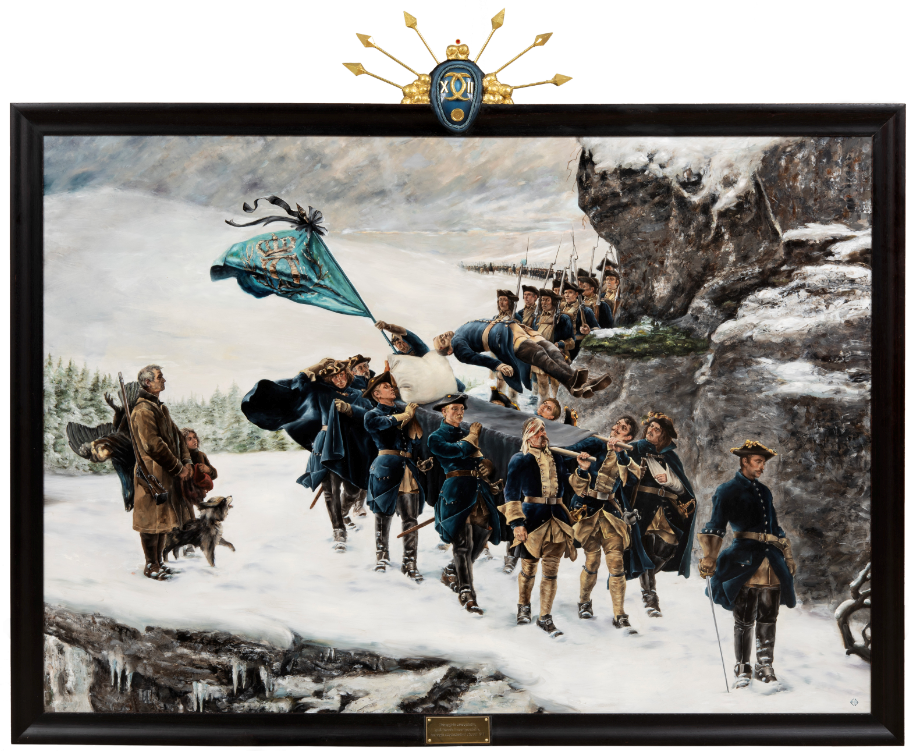
Ernst Billgren is a restless multi-artist who always has many irons in the fire. Currently, he is making carpets in India, statues in Thailand, and stage sets at Dramaten, among other things. In April, there is also the premiere of the much-talked-about art exhibition at the Nationalmuseum where the colourful and much-loved artist, as usual, really lets loose. Among other things, he has painted his very own version of the classic artwork The Funeral Procession of Charles XII.
I had complete freedom with what I would paint. The exhibition has the theme ‘new memories’ which might look a bit old and antique, but they are new memories that I've painted.
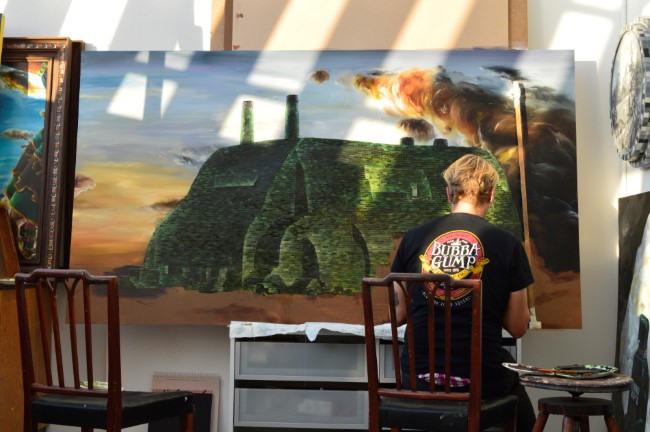
Ernst Billgren has a lively and curious expression when INRIKES meets him via Zoom. He is in his art studio in central Stockholm, surrounded by colourful paintings. This is where he feels most at home. Here he can sit from morning to night creating, forgetting time and space.
– There is no normal everyday life in my life, he says with a smile. I can get up when I want and do what I want. That’s the advantage of working alone. In the spring, however, it’s a bit different, because I’m working on some projects where I’m part of a team and then there are some times and things to stick to.
Ernst is currently busy with the final preparations for a major exhibition at
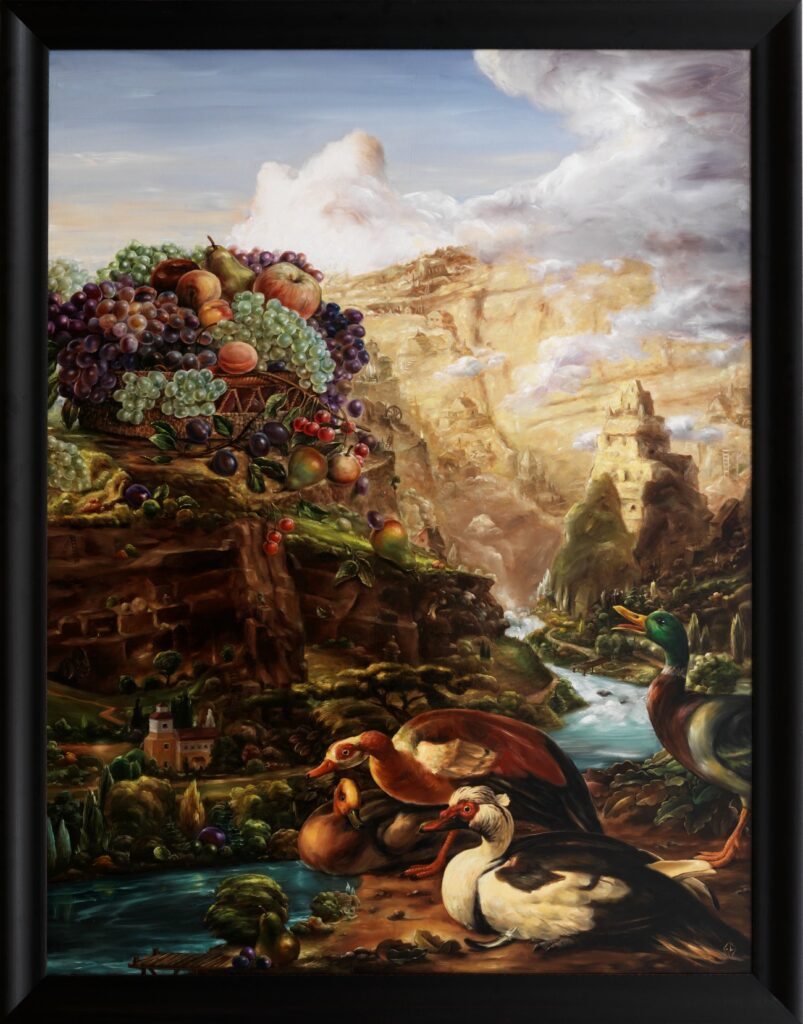
Nationalmuseum in Stockholm. The exhibition is titled Ernst Billgren – New Memories. Here, he challenges the unwritten laws and unspoken expectations of the art world with works that combine traditional art historical motifs with popular culture references and kitsch. He playfully references classical painting. Among other things, he has created his own interpretations of works in the museum's collections, such as the well-known painting The Entombment of Charles XII. Other works are reminiscent of landscapes and still life paintings of animals and objects from the Baroque period. ‘I had complete freedom to paint whatever I wanted. The exhibition has the theme ’new memories’, which might look a bit old and antique, but they are new memories I've painted. Among other things, I've made an improved version of the well-known artwork The Entombment of Charles XII, where he flies up from the bier. Because all that about him being carried on a bier is just made up, so I continued that tradition. National
The museum has no good works by Bruegel the Elder, so I have painted two new ones.
Ernst explains that he was involved in planning everything for the exhibition. – I'm a set designer for film and theatre and the like, and I often do exhibitions as well as a set designer. So what I'm doing at the National Museum depicts an exhibition at the National Museum, if you understand what I mean. I
I pictured the whole exhibition, how it would look. I imagined a Czech country museum in the 1970s with rather dusty, cracked paintings. I would have liked those little old women sitting on stools, and you wouldn't really know if they were dead or alive. Incidentally, I've made a stool called the National Stool, which will be at the exhibition.
When Ernst works internationally, he is often told that his art doesn't have a typical Nordic style, that it looks more South American.
– My art has some sort of folk tone that feels universal worldwide, and I like intense colours. My style is ‘much is more’ rather than the traditional pale Nordic. But Nordic animals are my thing. I've always stuck to Nordic animals; I don't paint giraffes or tigers. Even during his studies, Ernst noticed that all artists were trying to create the most original and personal art possible, and then he thought he wanted to create the most ordinary art possible – just to be contrary.
– Then I found out what was most common in Swedish art, and that was precisely landscapes and animals. Ernst often goes his own way and likes to question things. He has always gone his own way, even when it was considered odd and different.
When I was in primary school, the other pupils had maths and Swedish and that sort of thing, and I sat and drew. The teachers were very unhappy with that, but now no one complains anymore. Ernst's interest in studies only came about when he heard about the Södra Latin upper secondary school in Stockholm, as the school had a cultural profile. He then started with his schoolwork and improved his grades so much that he got into the education he wanted. A few years later, in the 80s, he studied at the Valand Academy of Fine Arts in Gothenburg, and it was also then that he broke through as an artist.
I didn't even learn to read in primary school, but now I've published ten books and become a professor. That probably would have surprised quite a few teachers. I wasn't just the worst in my class, but the worst in the whole school. One day I brought some birds I'd drawn at home to show my teacher, and naturally, she said, ‘You didn't draw those.’ But Ernst has never been discouraged; he's gone against the grain, though he now says that for the last 20 years, he's been more of the grain itself.
– I sit on all the selection committees and scholarship committees, I'm a member of the art academy and things like that. So what was alternative becomes the norm after a while. The next generation's duty is probably to break away from me and what is the current trend, so to speak.
How does AI look, which seems to be taking over creativity?
– The art world is surely worried, but I’m not personally. We can’t stop progress. I think the future is interesting and exciting. I’ve never had a computer, so I stand on the sidelines and observe that reality from a distance. When AI came along and people started copying art, I started a collaboration with filmmaker Tomas Alfredson where I asked him to invent all the images I would paint for an exhibition. So, I was working in a way that was equivalent to AI, but analogously, so to speak. Can you make a living as an artist in the future?
I always look ahead. I see myself as a researcher who creates something and then studies the outcome. Opinions are a blunt instrument for research. A researcher who has opinions before they’ve started isn't one.
Good researchers
– People have been making art for all time, but it's only in the last hundred years that we've seen the role of the artist we have today. I taught for many years at the art academies in Helsinki and Oslo, and I hardly ever discussed what their things looked like because it didn't feel like it mattered, as art can look like anything. Instead, I asked, ‘What are you going to use the artwork for?’, ‘Does the work function?’, but they hadn't asked themselves that question before. I think it's important to ask yourself what
is one's aim with their art and what one wants to happen. Is this a good work? To me, it's a bit like asking, ‘Is this screwdriver any good?’ The answer would be, ’it depends on what you need it for.' If you're going to hammer in nails with it, it's useless, but if you're going to screw in a screw, it works excellently.’
For me, good or bad art is different depending on who the recipient is. It has been taboo to ask oneself who the recipient is; artists have only asked themselves what they want to create. But if you make shoes or sausages only for yourself, you will eventually have a lot of shoes or sausages at home. But if you make shoes or sausages that interest others, you might achieve a greater impact. For me, it's very simple logic, so it's really no mystery. It's just about having a different perspective on
vad en konstnär är för något.
You previously mentioned that you don't have a computer. How do you go about writing books then?
I write by hand. I write in millimetre-sized letters in a notebook and then some poor sod has to try and decipher it.
Do you deal with the day-to-day running of your company, such as bookkeeping and finance?
– I haven't got a clue about any of that. I've never paid a bill in my entire life. Like in school, they wanted me to learn loads of other things besides drawing, but I'm more like a welding torch. I do my thing and then the world can do what it wants around me. I think Duplantis jumps a lot of pole vault, he can't be doing loads of other things during the day. My wife
She's had problems with everything electrical, she's a modern person who has a computer.
You are a recognisable face and are often seen in the media and on TV. Is fame a problem for you?
– No. It's an important colour on the palette, that people have a relationship with what you do, that there's a context. I see myself as a figure sent out into different contexts and exposed to different things, and then we'll see what the figure does in these different situations. I constantly expose myself to new challenges and constantly think, ’this is going to go down the drain'. But it's interesting for me to take on challenges, it drives me forward.
Av allt du har skapat genom åren, finns det något du är mer stolt över än något annat?
– Next. But what it will be, I don't know yet. I always look ahead. I see myself as a researcher who creates something and then studies how the outcome is. Opinions are a blunt weapon to research with. A researcher who has opinions before they've started is not a good researcher.
With an eye on the future, what will you do next?
– I have a book to write. It might be called 37 Things You Didn't Know About Art. It's not quite finalised yet, as I don't know if it will be exactly 37 or not.
ERNST BILLGREN'S SMALL-SCARES IN SWEDEN
”If you are interested in art, I recommend visiting Anders Zorn's home in Mora and Carl Larsson's home, which is also located in Dalarna. It's interesting to get to know the people and the environments behind the artworks.“ "In Skåne, art tours are often organised where artists across the region open their"
studios. These are usually advertised in the media well in advance, and you can spend a few days travelling around and visiting different studios and exhibitions.” “The National Museum in Stockholm is always worth a visit. They often have interesting exhibitions. Right now, they have an exhibition of art by the French artist Pierre Bonnard, which I
recommend.
ERNST BILLGREN
Age: 67 years.
Bor Södermalm in Stockholm.
Occupation Artist and author.
Family His wife Julia, the dog Chips and two adult children – Sigge and Elsa.
Currently Art exhibition at the National Museum, 10 April – 28 September. Set designer for the play Gertrude Stein, Gertrude Stein, Gertrude Stein, which opens at Dramaten in Stockholm this spring.