


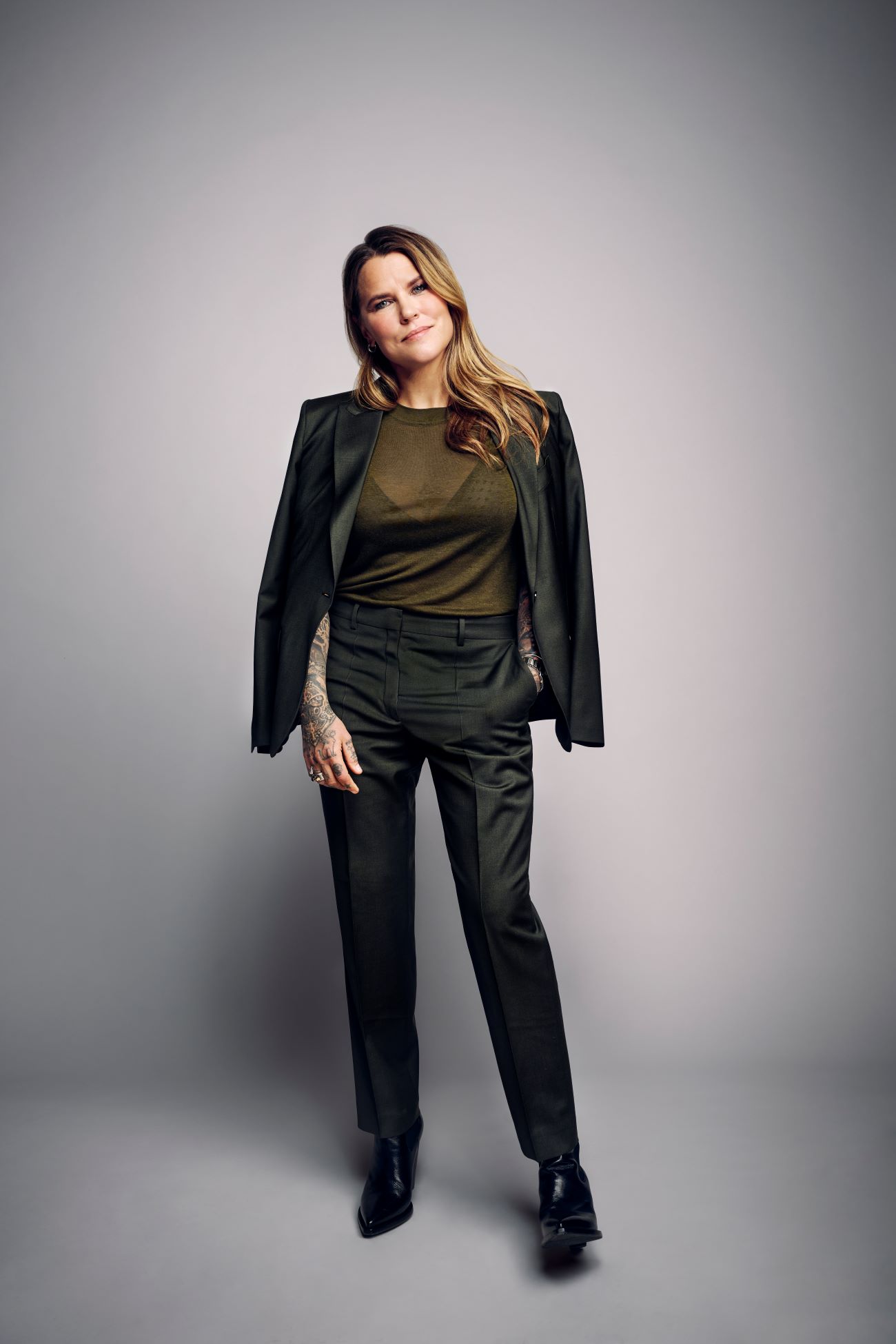
This fall, Mia Skäringer celebrates her 50th birthday on stage with her most beloved alter egos. But behind the humor is the story of a woman who has gone from constantly trying to fit in to daring to stand completely for who she is.
PHOTO CARL THORBORG
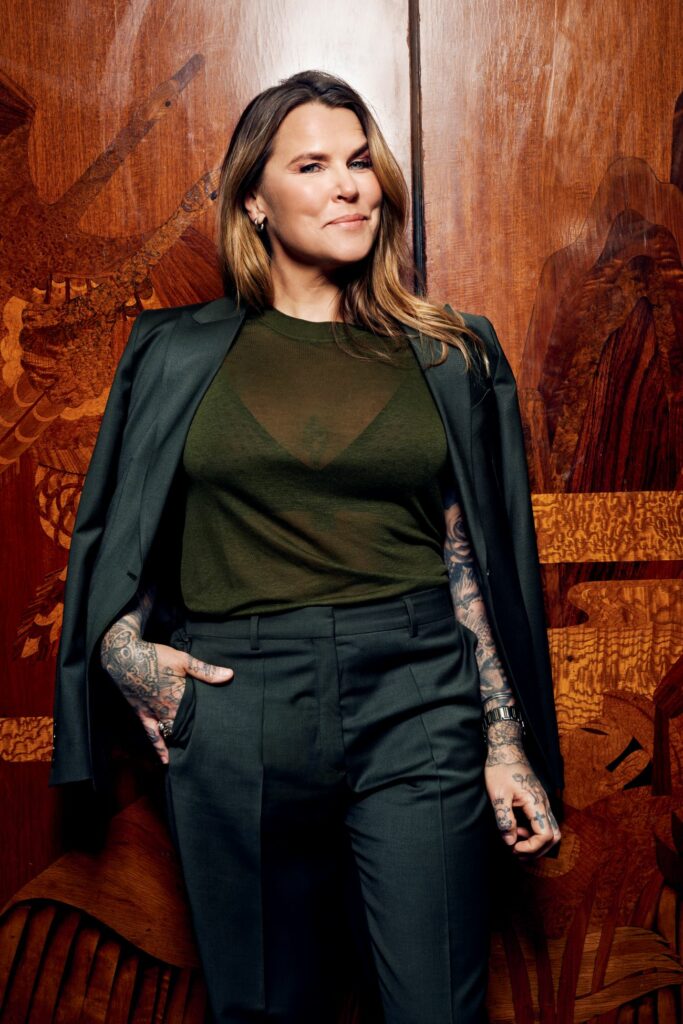
It's about a woman's ADHD and the eternal struggle between what you show on the outside and what you struggle with on the inside. Of all the alter egos that live in my head, Mia Skäringer has always been the role that has been the most difficult to play.
Mia Skäringer has rosy cheeks. When INRI calling up via FaceTime, she has just finished a sweaty session with her personal trainer. Her hair is in a ponytail, she is makeup-free and has a happy look. The days are packed for the new show Mia, Myself and I – The Last Supper, which premieres on September 17 at the China Theatre in Stockholm. The best time to get the interview together was right now – after the workout, on a comfortable couch in a gym with flowers and green plants in the background.
– There is an awful lot to do for a show like this, says Mia with a smile and wipes her forehead with the back of her hand. Right now I am at the stage where I have way too much material, so Helena Bergström and I, who directs the show, are going through everything, changing and shortening to make the script as tight and good as possible.
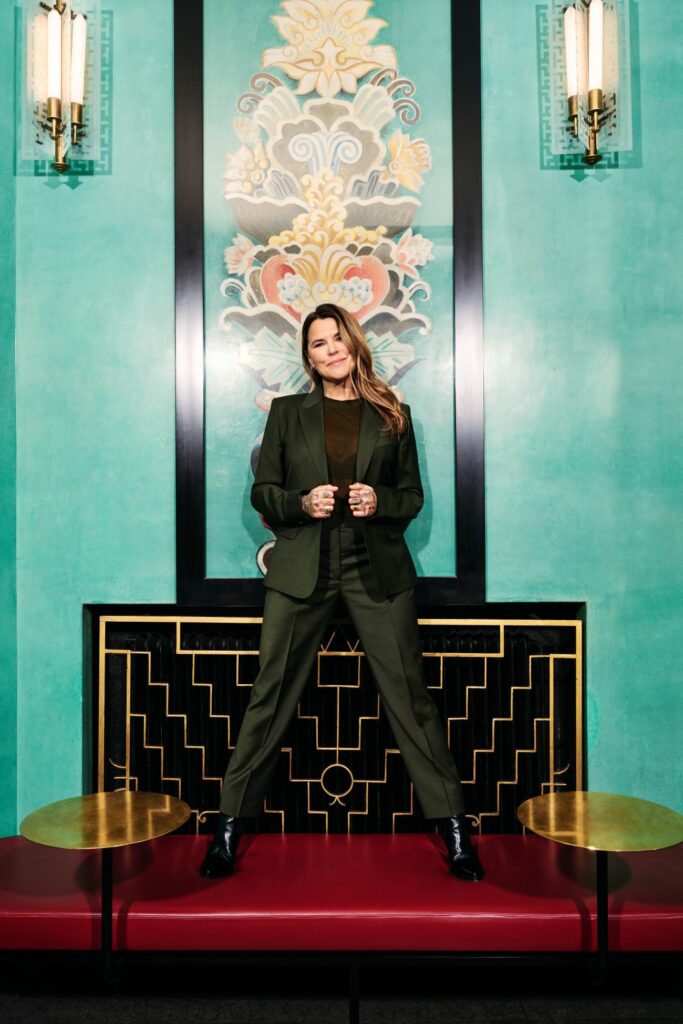
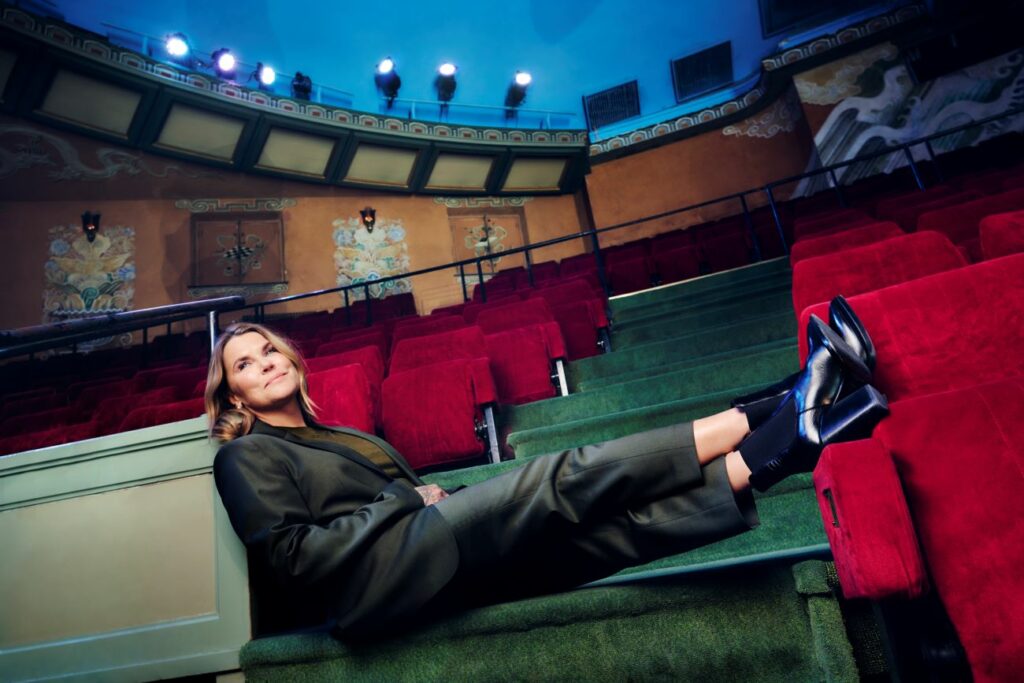
The show will feature Mia and two of her most iconic characters, Tabita and AnnMarie. The audience is invited to a party where she and her alter egos will throw Mia's 50th birthday party together. The result will be an intimate, self-critical, angst-ridden and very funny performance.
– It's about a woman's ADHD and the eternal struggle between what you show outwardly and what you struggle with inside. Of all the alter egos that live in my head, Mia Skäringer has always been the role that has been the most difficult to play, she says. Tabita and Ann-Marie are, according to Mia, a mixture of herself and women she knows or has known.
– Ann-Marie in the show is my co-dependent, you could say. She doesn't like it when things get too loud, she wants everything to be quiet and pleasant. Tabita is a more raw side of me. Mia stands in the middle and has arranged
this dinner to celebrate her 50th birthday, but she doesn't know how to handle it all in her female brain. My insides are a mess, and I try to illustrate that in the show.
Mia comes across as a seeker, someone who has spent her entire life trying to understand who she is, who she was expected to be, and how much of herself she has had to hide in order to fit in. But over the years, her own truth has taken shape. Being diagnosed with ADHD as an adult helped her understand herself better.
– I don't think much about the diagnosis, but I understand now that I was always trying to imitate others to be what I thought people should be. I've burned myself out because I was trying to play a role to fit in.
The show touches on life and death, the aftermath of MeToo, and the importance of being happy with yourself.
– You will never be enough as you imagine that you are enough. As a parent, wife, colleague or neighbor. But I think that's the point, that you will never be what you think is the ideal.
Mia had a colorful upbringing in Kristinehamn in Värmland. What held the family together was humor. They laughed a lot together, and both parents had a great sense of humor that Mia inherited and developed into her own unique style.
– As a kid, I was that girl who was always trying to read the room. Later in life, I realized that it was things like that in my upbringing that helped me develop my skills as a comedian.
Mia has three children: a 25-year-old son, a 23-year-old daughter and a 13-year-old son. She has done everything she could to ensure that the children have a safer upbringing than the one she herself had. She has also deliberately kept them away from the world of celebrity. The children have chosen other paths than the entertainment industry, she says. Now the two oldest can decide for themselves whether they want to be seen in public or not.
– I try to be a mother they can talk to. I think the most important thing you can do as a parent is to be there when your children want to talk.
Mia's husband Gabriel Lázár is a producer and entrepreneur in the media and entertainment industry.
– He is very talented and we have worked together a lot. I have learned a thing or two about how to run a business over the years, mostly because I have had to. But business is not my thing, I am not a natural businesswoman. I used to trust people far too much and thought that everyone else could do better than me, so it was best to do as they said. Over the years, I have learned to go with my own gut feeling. For example, I would never let anyone else decide what I should do when it comes to my career. I am also no longer ashamed to charge good money, but I let someone else handle the negotiations. I am fortunate to work with very talented people, not least my husband.
As a child, I was that girl who was constantly trying to read the room. Later in life, I realized that it was
Things like that in my upbringing that helped me develop my skills as a comedian
Tell us about what it's like working with Helena Bergström, who directs your new show.
– Helena also directed No More Fucks To Give, which premiered in 2018. We work incredibly well together. We weren't friends when we started working together, but we became very close right away. We feel absolutely no competition between us. There is nothing like that. We just want to push each other to be better. The best thing about Helena is that she is a fantastic actress, and that she has a lot of life experience. Mia adds that another thing she loves about Helena is that she is fearless and that it is contagious. Mia smiles and adds:
– Helena is not afraid to take the full step when we work on a performance together. She constantly pushes me forward so that the performance will be as good and honest as possible. Mia has done an incredible amount of work during her career, everything from radio programs, TV series, documentaries and films to books and large, acclaimed stage shows. When she is reminded of how creative and productive she has been over the years, she smiles.
– I can feel that earlier in life I rushed forward, always at full speed. Today I am more afraid of my precious time.
Mia takes an extra breath and brushes a strand of hair out of her ponytail with her hand. She smiles and says that age has given her new perspectives.
– It's important to stop sometimes and live in the present. The advantage of getting older is that you become more humble about life and can enjoy things more. Instead of trying to do everything, she tries to stay home more and take care of herself.
– When I have a day off, I like to be by myself. I'm very introverted in private. I like days when I don't have anything in particular planned.
I have always felt wrong in situations where I am expected to be something I am not.
Then I can think a little. Paint a little. Since I'm out filming and performing a lot, my home has become my free zone. My son is at school and then it's just the dog and me. I walk around in my comfy pants, I'm in the garden, I exercise a little and I don't have any specific times to fit in.
She used to suffer from being an introvert, because she felt that the world applauds extroverts and thinks introverts should toughen up.
– But what is normal really? I have always felt wrong in contexts where I am expected to be something I am not. I feel it especially when I have to go to some glamorous event in a dress and high heels. Then I feel like I don't fit in there, that I am still that Värmland girl from the forest. Today I am happy about that. I don't have to live in those high heels all the time. I dare to withdraw and be the introverted Mia when I feel like it. I no longer have the need to pretend to be someone else.

SMULTONSTÄLLEN
“Hoganas. "It's a place I love. Plus, it's close to Denmark and I travel there often, my daughter lives there."”
“Copenhagen. It's a lovely big city that I can breathe in. There are fresh currents of Europe there and I like that.”
“Italy. "We have a little house on the Amalfi Coast where we travel as often as we can. I feel very comfortable there."”
3 QUICK MIA CUTTINGS…
...reads: Not much, but there's a little poetry sometimes.
...listens to: Audiobooks and podcasts.
…watches: I devour streaming services, watch a lot of documentaries and various series. The last thing I saw that was really good was the movie Hamnet, I highly recommend that movie
MIA SKÄRINGER
Born: October 4, 1976 in Kristinehamn.
Occupation Actor, comedian, author, screenwriter, playwright and producer.
Bor Gothenburg.
Family Husband Gabriel Lázár and three children. Career in selection: Was a radio presenter already at the age of 17. Had a breakthrough with the TV series Mia and Klara. In 2009, the book and stage play Dyngkåt and hur helig som helst came out. Wrote the autobiography Avig Maria – a female comedian's day book which led to the show Avig Maria – No More Fucks to Give. Appeared in the film Hundraåringen som skalev ut tuntom frasen and svansvärd and has been seen in popular TV series such as Solsidan and Ann-Marie väljar þjäll.
Currently with: The performance Mia, Myself and I – The Last Supper, premieres this fall at the China Teatern in Stockholm.