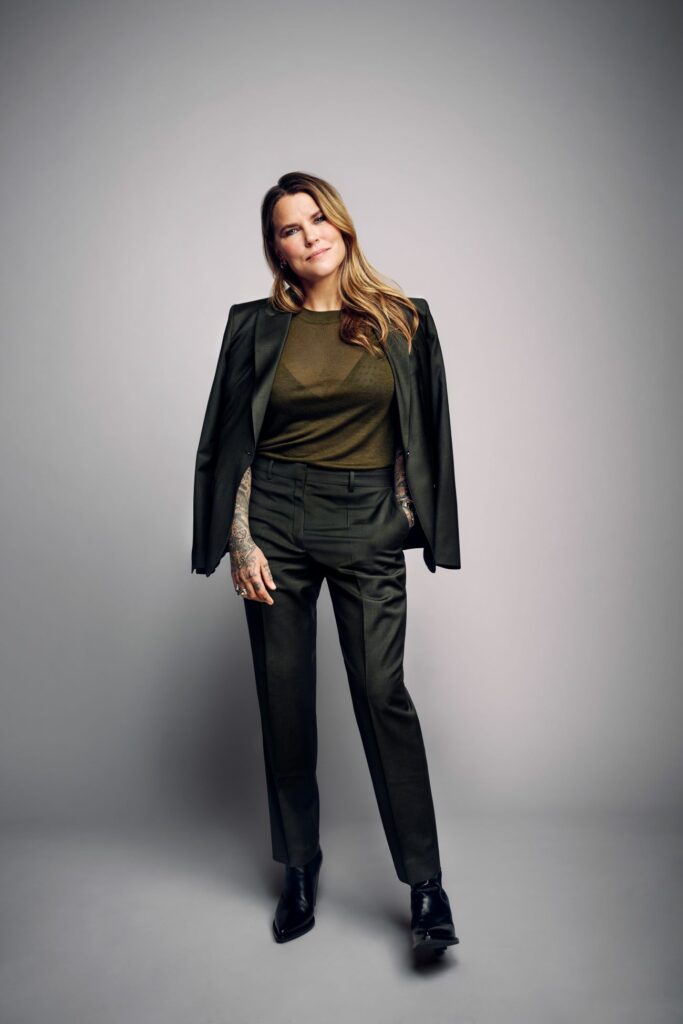



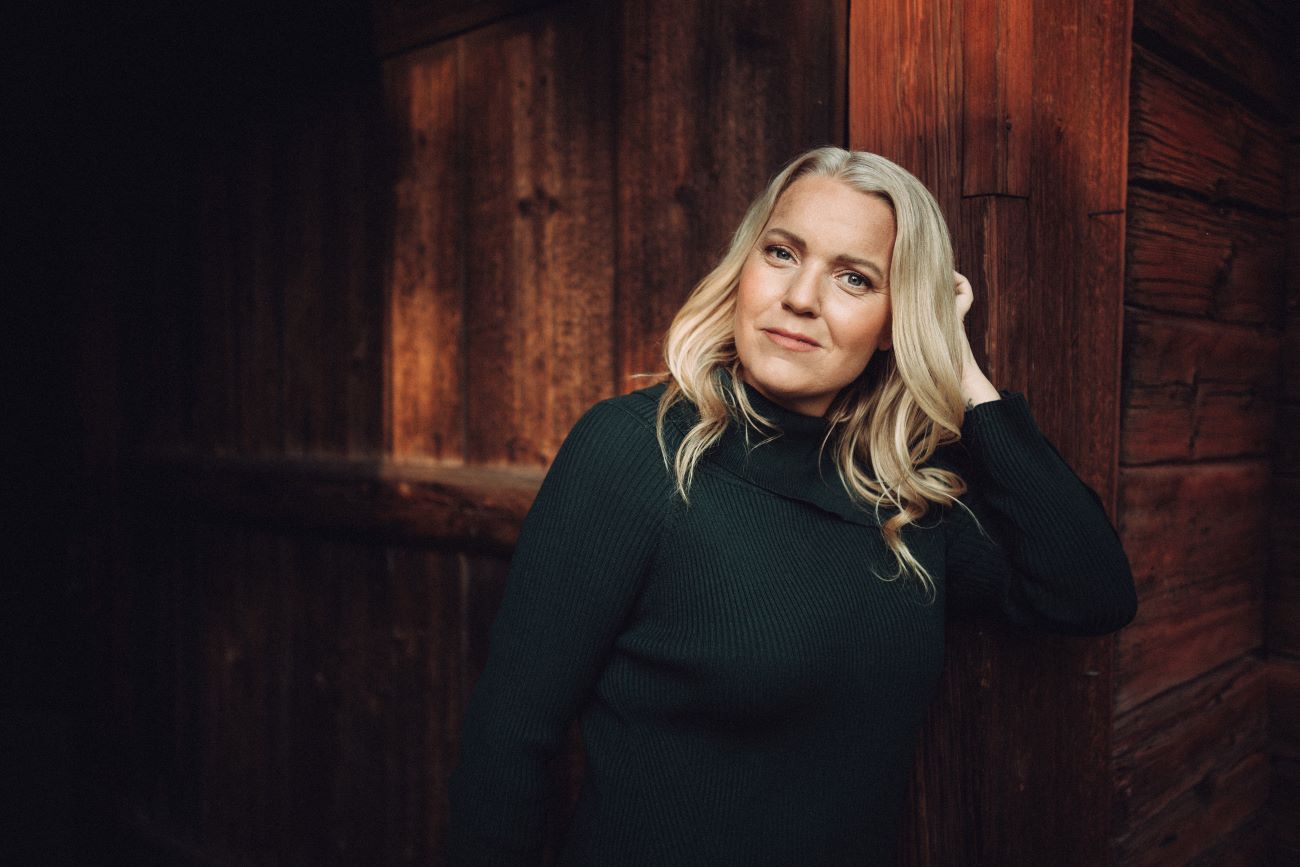
The fictitiousness is key in Carina Bergfeldt's storytelling. It has been about politics, about interviewing celebrities on the TV sofa. Now she is current with a book about the Swedish slave trade – it's going to be a duology.
PHOTO KAJSA GÖRANSSON
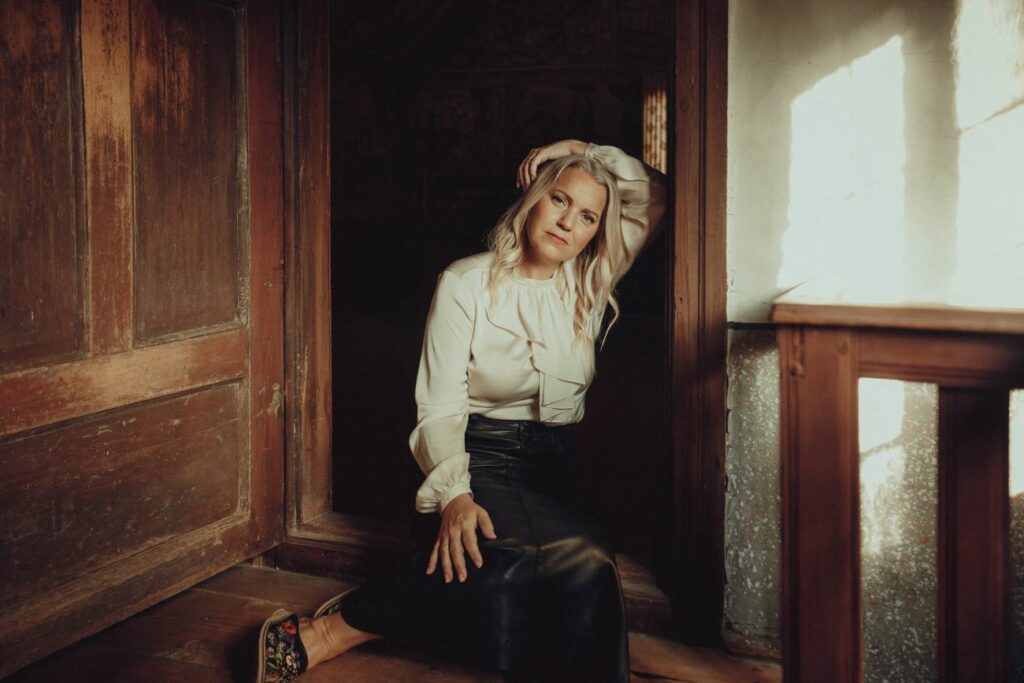
I was shocked myself when I understood the extent of Sweden's colonial ambitions, and everything I hadn't been taught in school.

Carina Bergfeldt, currently promoting her book, is sitting with her legs crossed on her living room sofa when INRIKES calls her via Zoom. She is without make-up, her hair is tied up in a bun, and she is dressed in a fluffy brown pyjama suit. A pair of feet are visible on her lap. They belong to her six-year-old son, who is off nursery due to a stiff neck.
– It's not fun to have pain in places you don't usually have pain, says Carina, looking with a warm smile at her son who is snuggled up in the corner of the sofa, tapping on his iPad. Carina Bergfeldt is a well-known and award-winning journalist, author, and presenter, most famous from TV. She quickly became popular with viewers when
She was a foreign correspondent in the USA for SVT during Donald Trump's first term as president. In recent years, we have, among other things, seen her as the presenter of the talk show that was simply called Carina Bergfeldt as well as in the travel program Dreamland. In addition, she has written several books, including the thriller Patricide, which was about domestic violence, and Seven Days Left to Live, which is a documentary book about a man in Texas who has a week left to live.
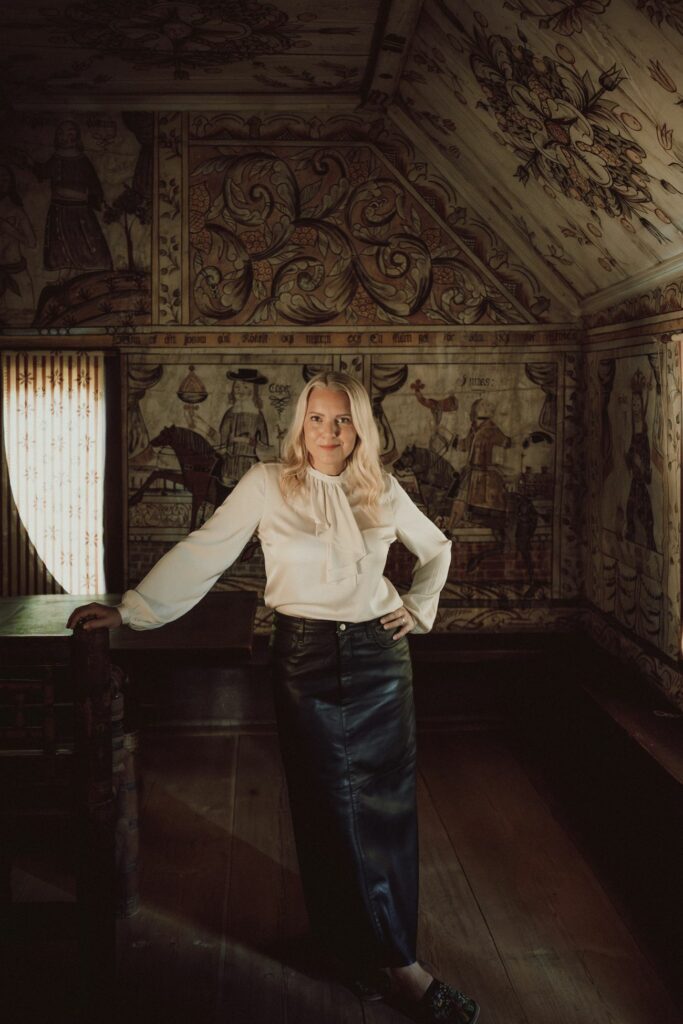
Carina is currently making waves with her novel *En dag ska vi återvända* (One Day We Shall Return). It is a captivating story where she tackles one of the most swept-under-the-carpet chapters in Swedish history – the era when Sweden tried to become a major power in the slave trade. The plot unfolds in 1790, on the Swedish colony of Saint Barthélemy in the Caribbean. Here, four lives are interwoven: a Swedish jurist and his wife, a young woman from the Ashanti Kingdom and her husband. Together, their destinies reflect the brutal reality that Sweden has long chosen to remain silent about.
– I was myself shocked when I understood the extent of Sweden's colonial ambitions, and everything that I wasn't taught in school, says Carina.
– When I realised how much we’d swept under the rug, I knew it was a story I just had to write.
One Day We'll Return is an incredibly exciting and interesting read. I'm guessing you put a lot of time into research. How did you approach the task?
– It's been a huge job. Nine years in the making. I really wanted to be on my feet when I wrote this story. It's about a subject that we knew quite a bit about, but where research is really progressing. In Aix-en-Provence, many of the documents from this time period have been preserved, as St. Barts is now a French territory. There are many thousands of pages from this time period that were thought to have been destroyed by hurricanes, rain, mold and centuries. Uppsala University is working like crazy on this now and they have managed to save and recreate approximately 30,000 pages of the documents that were thought to be lost. That's why it's an exciting subject where new information is constantly coming in.

Do you think that those who have held power in Sweden over the centuries hoped the documents would be lost forever?
– I don't know, but what's clear is that this is a part of Sweden's history that Sweden hasn't been keen to talk about. When you and I were at school, this wasn't part of the curriculum. It's only in the last ten years that schoolchildren have been taught that Sweden was a slave nation. I was completely stunned when I realised this, because it completely changed my perception of Sweden. We boast so much about our country, about neutrality, that we haven't had wars for two hundred years, that we have such a good reputation in the world, and so on. Carina further says that Sweden was envious of Denmark, which made a lot of money from the slave trade.
Gustav III's third attempt to become part of this was in every way, but he was bad at negotiating so he ended up buying a rubbish island.
St Barts was a barren and inaccessible island. The island had no water sources and it was difficult to grow anything. In that sense, it was a crappy island, but what the island did have was a really good harbor. In order for Sweden to participate and make money from the slave trade, they established a free trade zone where it was free for everyone to import slaves to St Barts, and then it was very cheap to export them. So with the figures that have now emerged, we can say that at least 8,000–10,000 people were sold with Swedish participation. On the whole, a total of 12.5 million slaves were sold during this time period. Considering that, 10,000 may not seem like a lot – but it would still be very careless to say that 10,000 people is 'little'!
Your book is an important history lesson, while also being exciting reading.
– Yes, I want the book to be a history lesson where you don't realise it's about real history. I want you to learn things.
You worked on the book at the same time as you did your talk show. How did that work out?
- What has been incredibly luxurious about these ten seasons of the talk show is that I've had my cake and eaten it too. I've had spring and autumn seasons of the show and in between there was space for me to go to Ghana and follow in the footsteps of the people the book is about. I could work at SVT with the talk show and in between be free to dedicate myself to this book project. There will be a second book, so it will be a duology – a nice word that I didn't know until I started working on this book.
What is your main driving force as a journalist, presenter, and author?
– I think it's because I'm curious about people. You don't have to share ideological views with others to find it interesting to talk to them. I'm curious about all people, not least when I was filming the documentary series '6 Days to Live' about people on death row in the USA. I've met many people who have committed terrible crimes, but I still find it interesting to talk to them. My driving force is to tell stories; to talk to people and get them to open up in an interview, or to write and tell something the reader didn't know. It might sound pretentious, but it's my calling.
Is being able to put yourself in other people's shoes and feel empathy an asset in your profession?
– I think people can sense if you are genuinely interested or if you are pretending, especially people who have been through difficulties have such tentacles out. And I think that when you yourself may have had something that has been tough or difficult in your background, maybe there is a little more understanding that life may not always be so easy. Maybe it can give me the opportunity to meet people in a good way. I feel like I have an easy time talking to victims, people who have been through terrible things. I don't think it is difficult to 'enter' their grief,
It doesn't scare me. I have great respect for grief and I prefer to talk to people when some time has passed and they want to tell and reflect on things they've experienced.
How did it work when you wrote "One Day We Will Return", given that there were no living people?
People to interview?
– That was probably the hardest part about writing the book, that I had to come up with dialogues and such. But I have had incredible help from the documentation I have had access to, so that I have been able to depict real legal cases. The main characters in the book are fictional, but all the legal cases depicted in the book have really happened. Carina looks at her watch. She has to finish the interview soon. It is time for her to get ready to leave and film the penultimate episode of her talk show. Her son's bare feet are still squirming in her lap and her husband Jesper is sitting a little further away on the sofa, scrolling on his mobile phone. Despite her busy schedule and still wearing cozy clothes, she does not seem stressed in the slightest.
You look content with life. What makes you truly happy?
– My child and my husband. When it comes to my work, I love it when I manage to craft a really good sentence. Beautiful sentences in texts are among the things that make me happiest in life. It sounds very nerdy, but it's true.
Det finns en mening som jag är extra stolt över: "I min famn kan du dö som ett barn, bortglömd av alla andra, men högt älskad av mig." Jag känner att det är en stark och känslomässig mening som fångar känslan i boken.
– I enjoy listening to song lyrics, I can get stuck on a particular phrase in a song. I like Taylor Swift, among others, because she writes great lyrics. She has a song where she sings that her good name is hers to ruin. I borrowed that phrase for One Day We'll Return. Axel, who is one of the main characters in the book, is sitting in his first chapter at Den Gyldene Freden in 1790, and there he raises his glass and quotes Taylor Swift.,
but he doesn't know about that. Carina laughs and concludes:
– ‘A toast to my good name, which is mine alone to ruin.’ I was incredibly pleased with that sentence.
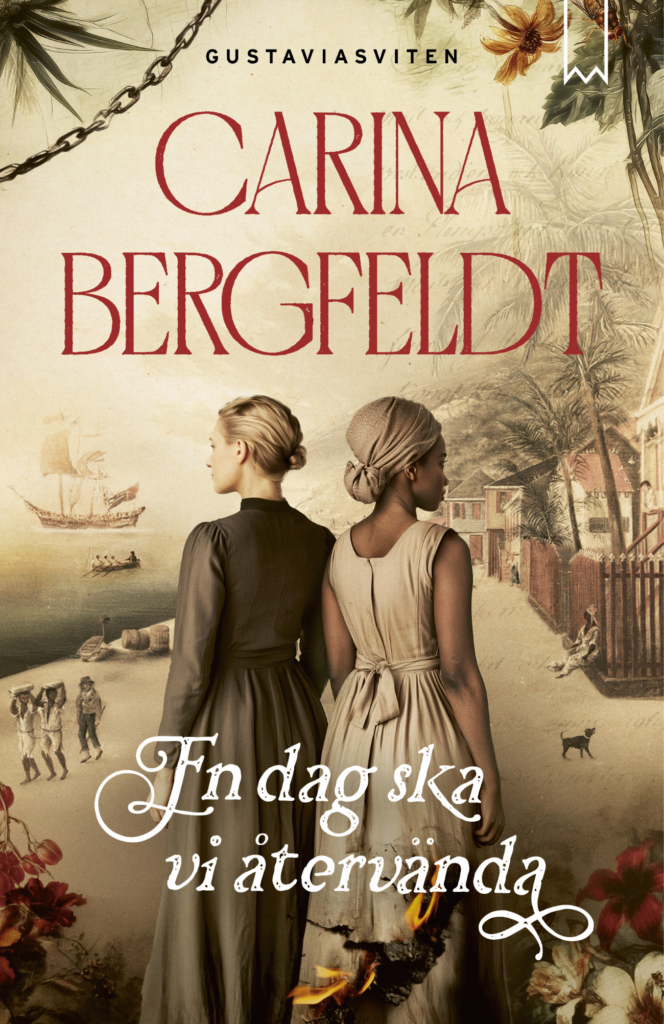
The Gustavia Suite. With vivid character portraits and historical acuity, a part of Sweden's silenced past is depicted: our role in the transatlantic slave trade.
3 QUICK
Watching: “The dogs. It's a really good series. It's stylish and snappy. Superb script, superb actors.”
Listening to: “Taylor Swift. Always. Or Miss Li when I want to cheer myself up.”
Reading: “My friends' books. I'm lucky to have friends who are insanely creative.
FAVOURITE PLACES IN SWEDEN:
“The summer cottage on the West Gothian plain is number one favourite place, all categories. It is paradise on earth. When we are there, our son is close to lots of cousins. It is wonderful to see him rolling around on the grass and jumping on the trampoline with his cousins, while my siblings and I, along with our partners, sit and barbecue by a lake in the middle of nowhere in the woods.”
“We have a spa near where we live that my husband and I usually escape to at least once a month. We arrange for a babysitter, and then we go to our favourite spa and enjoy the steam room, talk, dream, and come up with new programme ideas together.”
“Arlanda Express. The feeling when you get on the train and are soon to fly off on an exciting reporting trip is outstanding. I love travelling and doing reports, even though I now like coming home again.”
CARINA BERGFELDT
Age: 46.
Bor Stockholm.
Family Her son Hamilton, aged 6, and husband Jesper, a TV producer.
Occupation Journalist, author and presenter.
Background in brief: Worked as a journalist at Aftonbladet for ten years. Began her television career as SVT's correspondent in the USA 2016–2020. Hosted the talk show Carina Bergfeldt for ten seasons. Made several series of the travel program Drömlandet together with Farah Abadi. Has written several crime novels and reportage books that have been sold to about fifteen countries. On SVT Play you can currently watch the documentary series 6 days left to live where Carina interviewed people on death row in the USA.
Currently With the novel One day we will return, which is the first part of a two-part epic novel series.