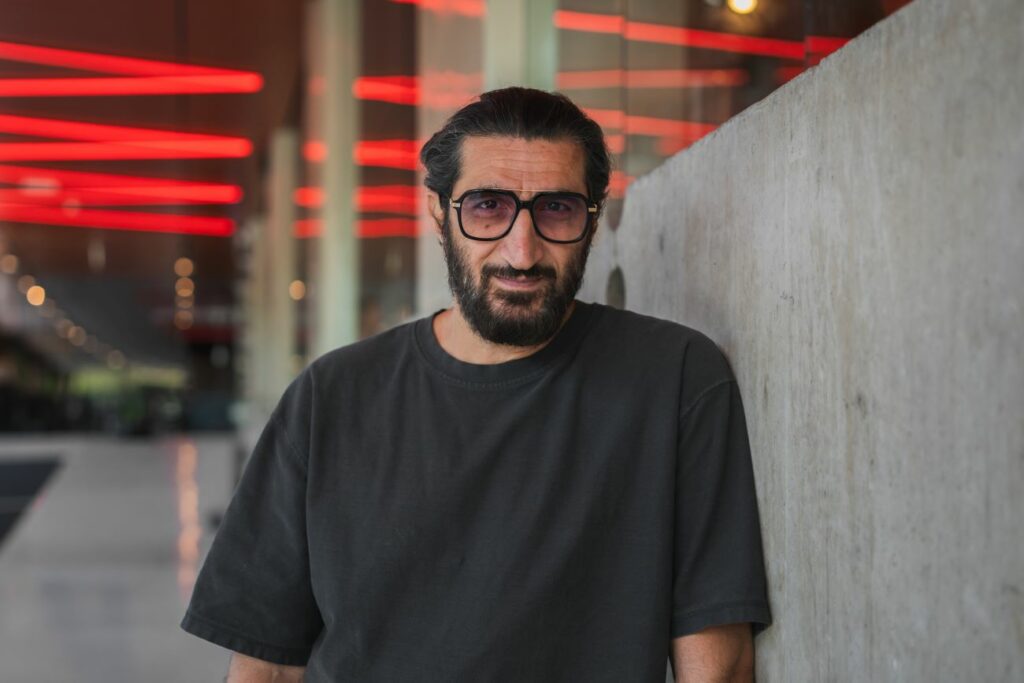


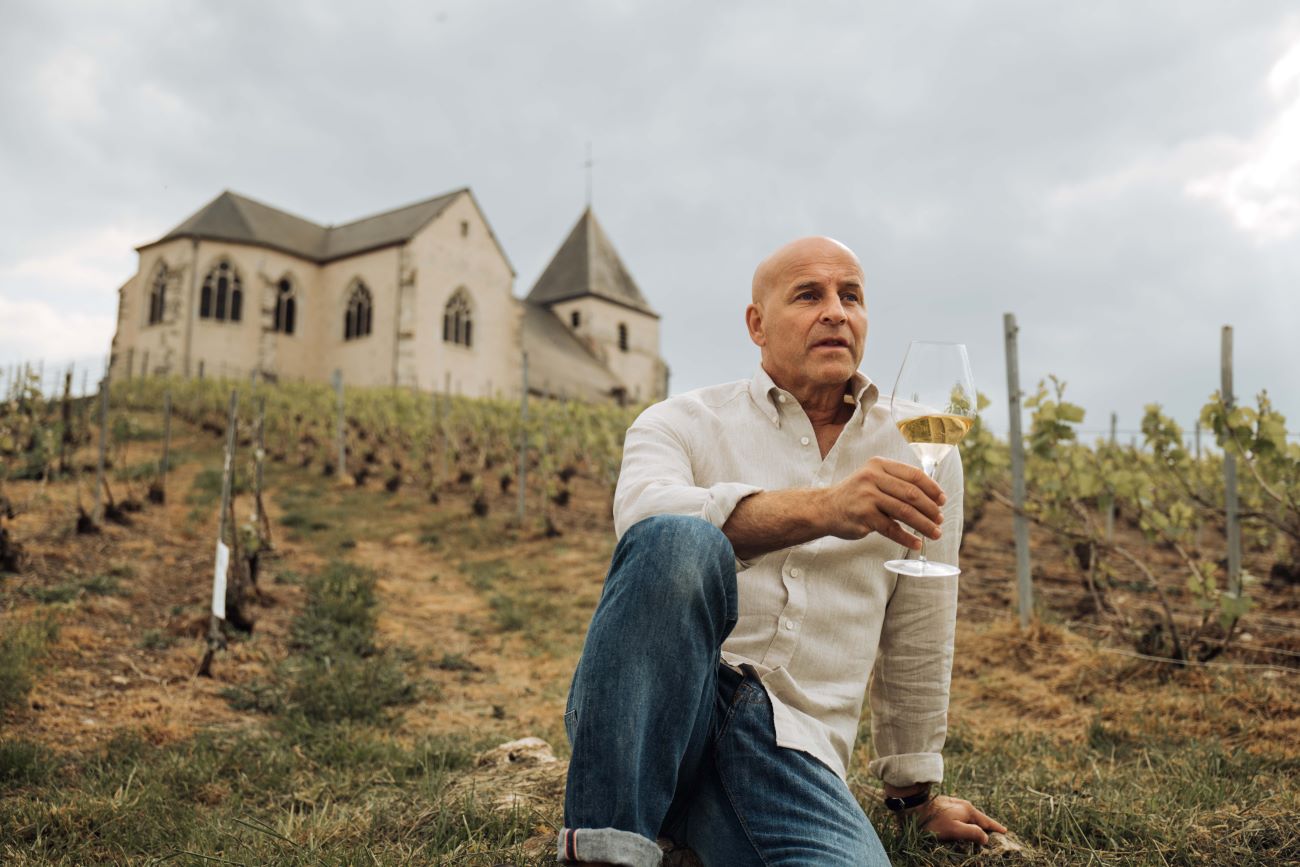
Richard Juhlin is considered the world's foremost champagne expert, known for his incredible sense of smell and taste. And for remembering almost every champagne he has tasted, which today numbers over 16,000. How did it all start, and what drives him?
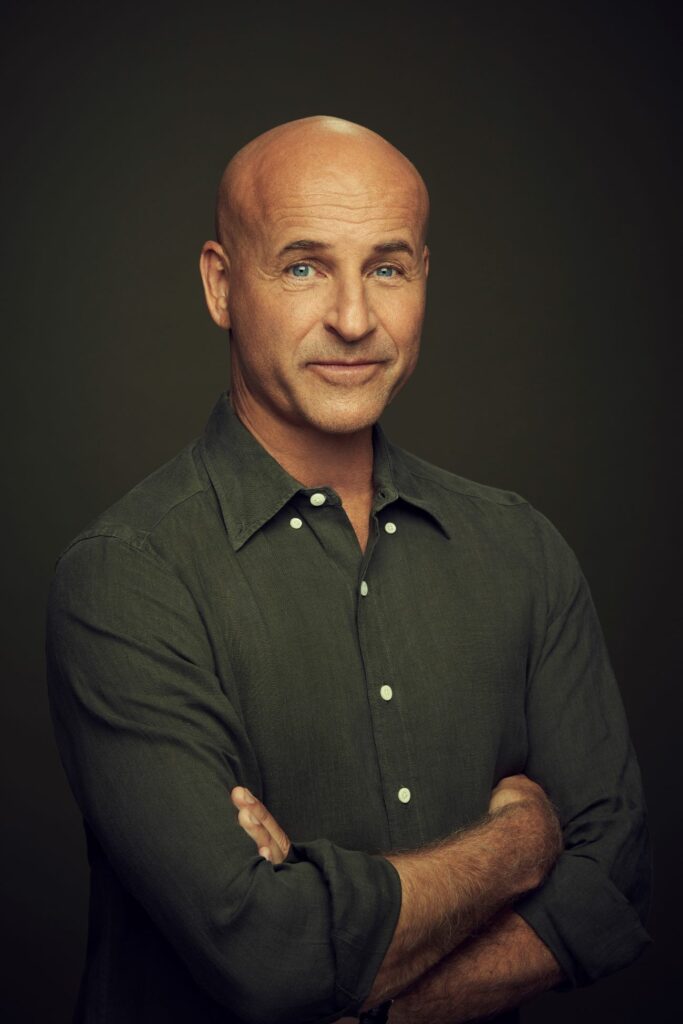
Richard Juhlin possesses an innate and unusual trait: he has one of the most sensitive noses in the world, allowing him to perceive and identify scents at a level few others can achieve. This extraordinary sensitivity has sometimes been a burden. As a child, strong odours could make him avoid certain companions, and on the football pitch, an opponent who had eaten garlic could disrupt his concentration. When dining out, he prefers to sit in a corner, as far as possible from toilets and perfumed ladies. In addition to his unique sense of smell, Richard has an exceptional memory for scents. He can recall specific aromas from different places and events, plants in nature, someone's home – and not least, the thousands of champagnes he has tasted and the moments associated with them.
– When I close my eyes and think of a champagne I really like, a picture of its taste appears in my mind – a mosaic of colours, shapes and textures. It's like an abstract work of art: crystal clear to me, but almost impossible to describe to others. This ability is called «synaesthesia» – a neurological phenomenon where senses cross over. Some people can hear colours, see sounds, or, like Richard, get visual impressions from tastes.
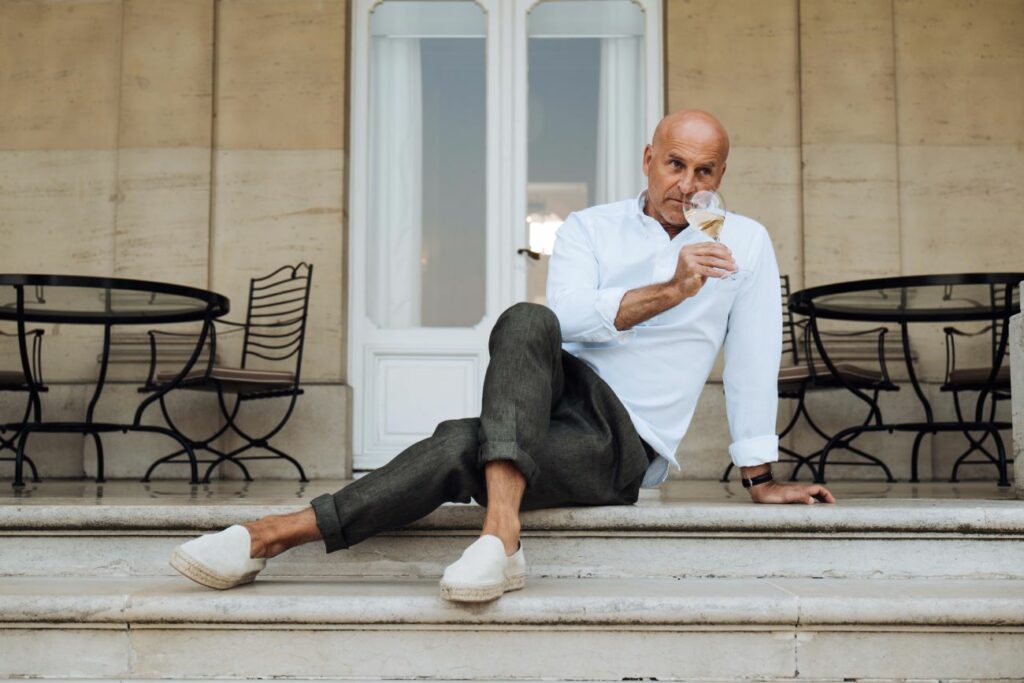
We have flavour
– I think my childhood played a role in how I use my sense of smell today. We are born with five senses, but most people navigate the world primarily through sight and sound. We might use the other senses for a little enjoyment, but our surroundings are understood far too little through our sense of smell and taste, explains Richard. He believes his mother had a significant impact on his development. They often talked about flavours, analysed the food they ate, and during their many walks, they would often stop to identify smells in nature.
Today Richard runs a company connected to champagne. But how did it all start? Even as an eight-year-old, he had a premonition that his specific qualities might be destined for wine tasting. The family was on holiday in the Moselle Valley, and wine tasting was on the agenda.
When I close my eyes and think of a champagne I really like, an image of its taste appears in my mind – a mosaic of colours, shapes, and textures.
– It was very clear and before the tasting the winemaker described the notes in the wines. For Richard, it was a simple job to pair the right notes with the right wines, something no one else in the company managed to do. Everyone was deeply impressed, and the event was etched in their memory.
Sparkling was the thing
During his school years, his friends started drinking alcohol. Richard was more focused on training and would often discreetly get rid of the alcohol at parties, pouring it down the toilet. The turning point came when he and his best friend Hannes Holm were on a New Year's trip to Tenerife with their mothers. There they came into contact
with sparkling wine and realised it was something completely different. We drank a lot and fast and had a blast.
And the best bit was that we felt refreshed the next day and were able to train. That was the thing
– we used to take this to student parties instead of beer or some kind of mixed drink. A few years later, a film director Hannes knew treated us to proper champagne.
– It was an incredible, overwhelming and fantastic experience. We didn't know how to spin the glass then. But we sat and listened, looked through the glass, saw the reflections, how small images of bubbles formed and the landscape changed. The experience took us into a whole new world.
IN LOVE WITH CHAMPAGNE
During his first summer holiday after completing his physical education teacher training, whilst on a trip to France, he stopped off in Reims and visited the Pieper-Heidsieck champagne house.
– That’s where I fell in love. Once back home, he searched for every bit of information he could get his hands on. There was a book on champagne in the bookshop and another one in the libraries. Systembolaget had eight different varieties in its standard range – plus three more premium varieties in the specialist shop in Östermalm.
Richard then began to really go all out, which proved very expensive on a PE teacher’s salary. His girlfriend at the time broke up with him, saying: ”I can’t be with a bloke who spends all his money on champagne and drinks it all away”. It worked out at one bottle a week, and after eight weeks he’d worked his way through the range. Of course, he eventually bought the three from the specialist shop as well.
– What saved me was an old friend who worked as a maître d’ at the French Dining Room at the Grand Hôtel and had just started Sweden’s first sommelier training course. We spoke on the phone and exchanged thoughts and insights every day. At the same time, I studied everything I could get my hands on by myself and travelled down to Champagne during every school holiday.
A unique ability
Richard entered the wine tasting circles and soon realised that he was more skilled than the others, both at smelling and tasting, and at then remembering them. At first, he did not understand that it was he who had a unique ability, but believed that it was the Swedish wine journalists who were mediocre.
– I quickly gained a reputation as «Mr Champagne». This was largely because these otherwise skilled wine tasters didn’t taste champagne in that way. They tasted wine, and once that was done, the party would start – and only then would the champagne be brought out. He began to make a name for himself internationally. After seven or eight years in the business, he was invited to a blind tasting organised by Decanter Magazine, one of the world’s largest and most respected wine magazines. As usual, Richard found it quite easy to identify and remember details about the champagnes, and was struck by the fact that the international wine tasters were no better than the Swedish ones. It was then that he began to realise that his ability was exceptional. On his return home, someone used the expression ‘photographic olfactory memory’ for the first time – a phrase that is now strongly associated with Richard Juhlin.
Paris Blind Testing
Two legendary events often mentioned in connection with Richard are the Millennium Trial in 1999 and Spectacle du Monde in 2003.
Leading up to the turn of the millennium, I managed to get the Champagne guys on board and organised a tasting with the best champagnes ever made and the best tasters in the world. The spectacle took place in Sweden, at Villa Pauli in Djursholm, and received significant international attention. Richard's brand got a boost, and the event resonated for many years. In 2001, his book ”Champagne – the Grand Tasting” won gold at the Gourmand World Cookbook Awards. In 2003, some of the world's best champagne tasters gathered in Paris for a blind tasting of 50 champagnes, meaning they knew nothing about what was to be tasted.
“I got exactly 43 right, and the person who came second only managed four. I usually get 25, but on this particular day I had a bit of luck as well,” says Richard with a smile.
Apart from having an exceptionally keen sense of smell and taste, and being blessed with an excellent memory as well – do you have any ”tricks” that help you do so well?
- My memory is selective. For example, I don't remember my children's personal identification numbers. I'm a big de-clutterer and disposer, which means I have fewer things to think about and a clarity on what's important. Furthermore, I believe mindfulness is a very important part, i.e. my ability to focus one hundred percent and ignore everything else.
Can you turn off your nose so you don't have to smell odours?
– No, but I've learned to dial down the sensitivity a bit. He explains that the sense of smell can be more or less switched on during different periods, depending on how much he uses it, much like with physical training. If it's a period with less tasting, and winter is also approaching and outdoor smells are fading, the nose is slightly less sensitive. Since 1998, champagne has been Richard's full-time occupation.
– When I stopped working as a PE teacher, my aim was to spend as much time as possible doing what I love. My strength – and my weakness – is precisely that: I’m driven by a burning passion and strong commitment, and not in the slightest by making money. Success as an entrepreneur goes hand in hand with that passion. On stage, he speaks with such conviction and enthusiasm that he’s a real pleasure to listen to. With a flair for teaching and a degree from GIH under his belt, he handles challenges and groups at all levels of ability.
”What’s more, I’m good at talking and appearing on camera, which is quite unusual for people as nerdy as me,” he says with a laugh. He describes “Champagne Club” as the world’s largest independent source of information on champagne, and this is where he concentrates most of his activities. Here he publishes books, holds tastings, organises trips, films videos, gives lectures and more.
– Navet is my ”Tasting Library”, where I’ve added 16,400 champagnes – which is completely unique.
Those who are real wine buffs can pop in there and get the latest on flavours. From time to time, he also receives requests to act as a consultant, helping to build private wine cellars, particularly in Asia and the US, but
even in Sweden.
You produce your own sparkling wine, and your name is associated with the Guldkula champagne. How does that sit with your independence?
– My own sparkling wine is produced in Limoux – a region which I neither assess nor describe, meaning it falls outside the scope of my usual business. Guldkula is not a champagne brand in its own right. It is made from existing champagnes from various producers. Håkan Guldkula determines the style and price point; I investigate what is available. I do not rate these, so they are given zero points in my database.
- The core of my brand is that the wine world believes in and trusts my judgments, and therefore listens to what I have to say. Therefore, it is incredibly important that I never compromise on
my independence.
Navet is my ”Tasting Library”, where I’ve added 16,400 champagnes – which is completely unique. Those who are real enthusiasts can go in there and get tasting updates.
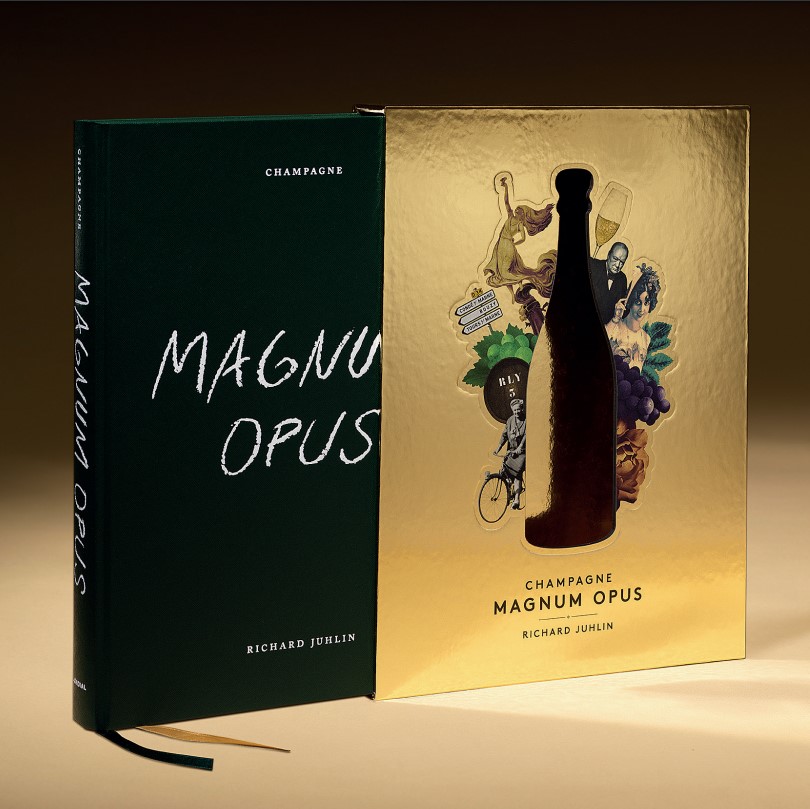
RICHARD'S TIPS FOR THE NEW YEAR'S CAMPAIGN
Invest in really good glasses. It’s an investment you’ll enjoy for a long time to come, and after your first or second glass, you’ll realise it was worth the extra cost. Champagne is a bit of a luxury and festive, so take the time to pause and reflect, and really savour those first two minutes. Reflect on what the champagne has to say to you and let it express itself fully. This will enhance the experience, and the impressions will linger as you drink the rest. Champagne is the most multifaceted and subtle drink there is, full of little details that make it magnificent. If you fail to pause and give it a chance, you risk missing out on the whole experience.
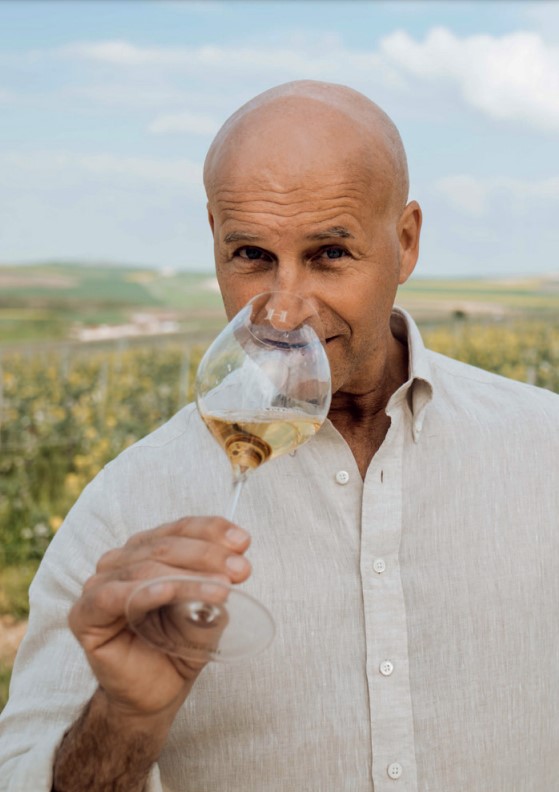
RICHARD JUHLIN
Age: 62
Family Partner Ragni and 5 children
Bor Lidingo
Occupation Champagne entrepreneur Fun facts about Richard: He is the world's leading champagne connoisseur when it comes to assessing and recognizing aroma and taste. He has tasted over 16,000 champagnes and holds the world record for the most champagnes tasted, according to Guiness World Records. In 2013, Richard was appointed by Francois Hollande, former president of France, as a Knight of the French Legion of Honor, which is France's highest order and was established by Napoleon Bonaparte in 1802. Among Richard's other
awards include the Chevalier d'Arc from 1997 and the Mérite agricole from the French Ministry of Agriculture in 2002.