



AI is expected to change more jobs than it eliminates. At the same time, the value of things that cannot be squeezed into a standard response is rising: practicality, judgment in chaotic situations, and the ability to make people, technology, and everyday life work when reality runs its own race.
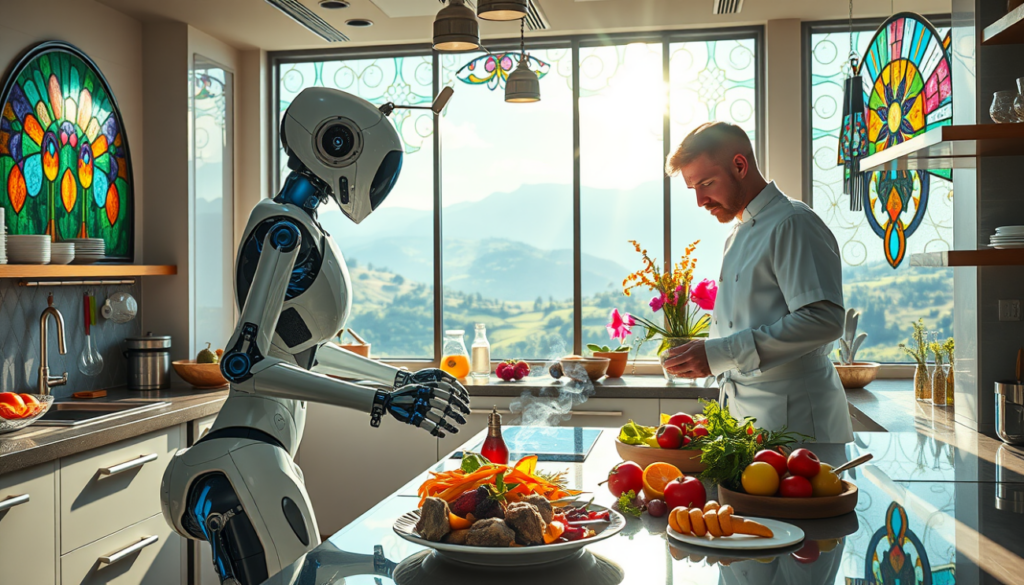
AI can make suggestions for menus, purchases and layout. It is less able to save a service when two staff members are sick, the fryer is malfunctioning and table seven is still waiting for its fish. Chefs are also among the professions where job opportunities are limited.
are considered good.
In many offices, it is already possible to produce meeting materials, a customer email or an initial analysis before the coffee has had time to cool. In other places, the technological leap is much less noticeable. Someone has to weld in the right position or start a rattling heat pump in a boiler room where reality doesn't quite follow the blueprint. How much can technology actually take over before someone has to step in and do the job?
The ILO's 2025 update shows that one in four workers globally is in occupations with some degree of exposure to generative AI. At the same time, the conclusion is clear: most jobs are expected to change more than disappear. AI primarily takes care of tasks such as summarizing, formulating, sorting and producing a first draft. Not entire occupations in one go.
Suddenly, the cutting-edge expertise of the future looks less polished than one might have thought. It might as well wear work pants and safety shoes. Take the welder. AI can calculate joints, simulate strength and suggest work procedures.
It is less able to sense when the material is behaving strangely, when the situation on site does not at all resemble the drawing or when something looks wrong even though it should work. The same applies to electricians, plumbing fitters and service technicians. These are jobs where the environment is changing, where someone else has already rebuilt ten years ago and where responsibility cannot be handed over to a well-formulated proposal. The Swedish Employment Service also points out that electricians, among others, are professions with very good job opportunities. In healthcare, AI can relieve the burden of medical records, prioritization and administration. But it can
cannot see that something is going wrong before it appears on the screens. It cannot weigh a look, a skin tone, a breathing pattern and a relative's concern against each other, and at the same time bear responsibility for the decision. Therefore, specialist nurses, nurses and assistant nurses may become even more sought after as other things are automated. Here too, the Swedish Public Employment Service points to great recruitment needs.
From a distance, the culinary profession may look like a collection of recipes. In practice, it's timing, hygiene, temperatures, product flows, improvisation and a dining room that suddenly wants to change everything. AI can make suggestions for menus, purchasing and layout. It's worse at saving a service when two staff members are sick, the fryer is malfunctioning and tables are full.
still waiting for their fish. Chefs are also among the professions where job opportunities are considered good. The same pattern is visible in the broader forecasts. The World Economic Forum expects that the structural transformation by 2030 will affect 22 percent of today's jobs. The fastest growing roles in percentage terms are often in technology. In actual volumes, large increases are expected in frontline jobs in construction, healthcare, education, food production and transport. At the same time, administrative and routine office roles are among those expected to decline the most.
The strongest professions will likely be those that combine technical support with human judgment.
The supervisor who uses AI for planning but sees that the schedule is broken. The welder who reads the drawing but also the material. The specialist nurse who gets help with the documentation but makes the decisions herself when
the situation is changing. In an AI-heavy working life, tinkering with bicycles, sewing, building, turning or coaching a youth team can resemble training in things that have become more valuable: patience, precision, material sense, group spirit and the ability to solve problems that cannot be pasted into an answer field. The job market of the future resembles less a battle between man and machine and more a reassessment of what is actually difficult. AI can write a lot and suggest even more. But it still cannot put on steel-toed shoes, save a service or bear responsibility when something suddenly goes wrong.