

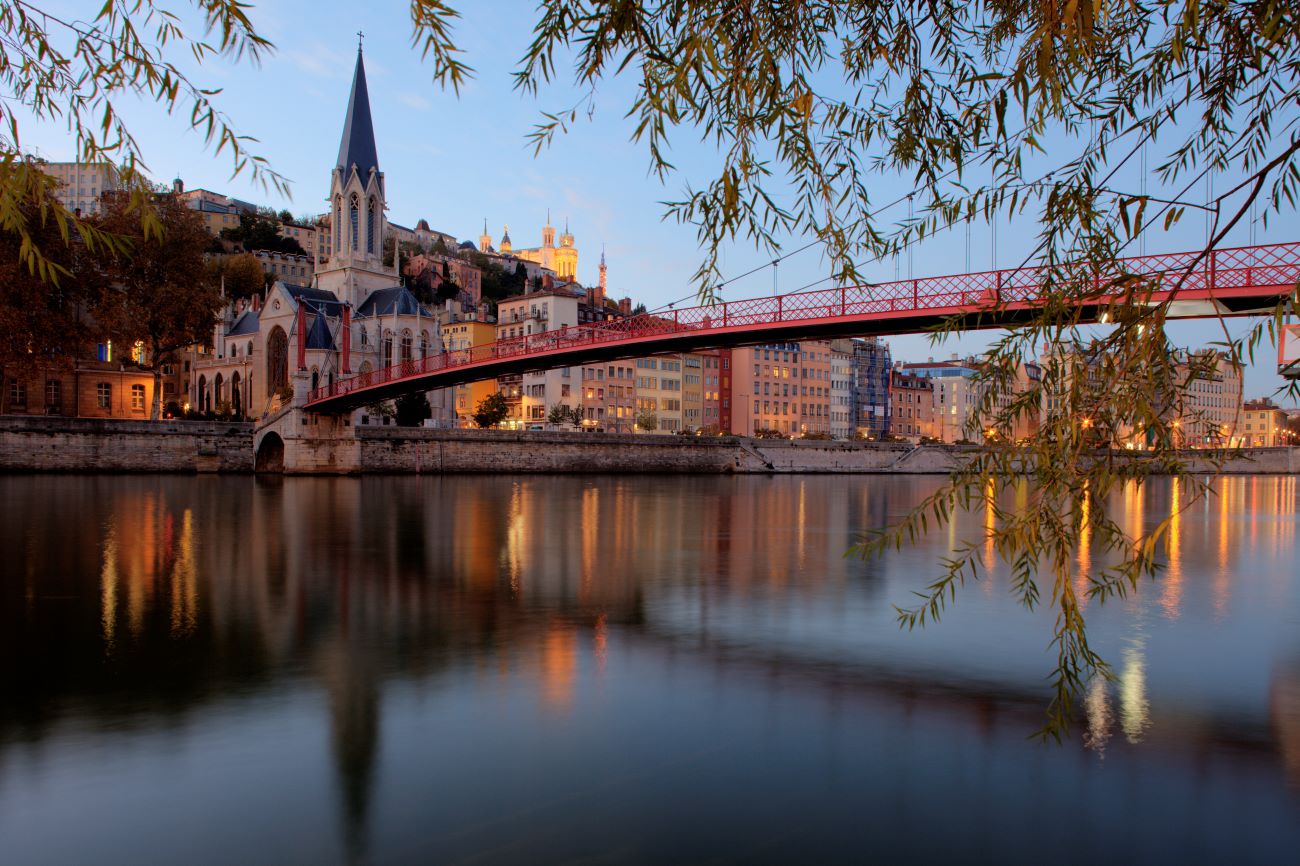
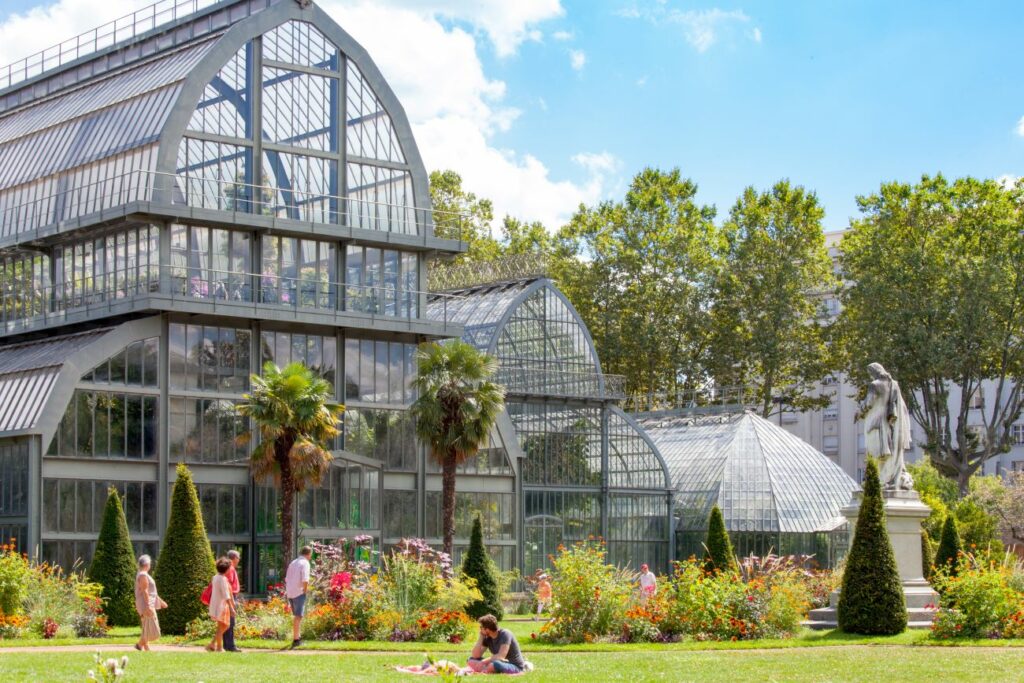
An opportunity for INRIKES to travel abroad presented itself when Norwegian, together with Atout France, invited us on the inaugural flight to Lyon. Known as the capital of gastronomy, Lyon is today also one of the country's greenest cities. A wide range of history, restaurants, and culture awaits.
– most things within a 15-minute radius.
Getting from Lyon airport into the city is easy, the train station is directly connected, and you can buy a ticket for the Rhône Express train either in advance or here at the station. We drop off our bags at Hotel Roosevelt. Hungry, we head to the newly opened Brasserie des Roseaux, one of the city's 5,700 restaurants. Chef Tabata Mey and her husband Ludovic run the brasserie; the food is fresh, traditional, and good. At the back of the premises, you can peek into the kitchen and see each dish before it's carried out. A cherry clafoutis and then we're ready.
A STORY AT THE TOP
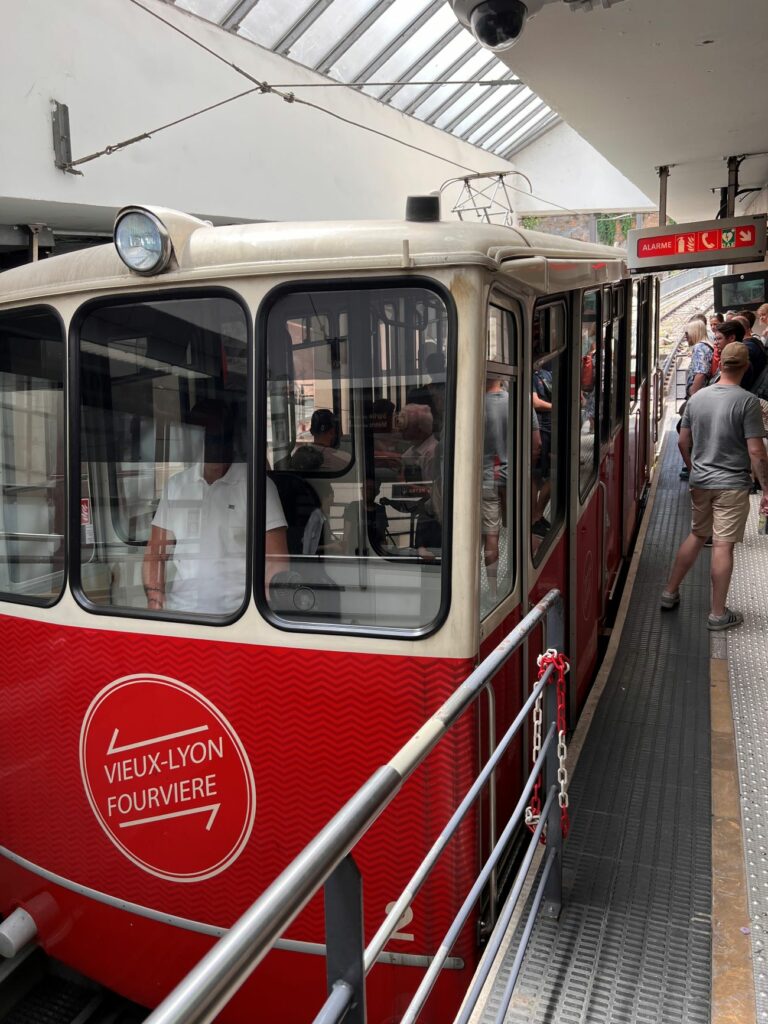
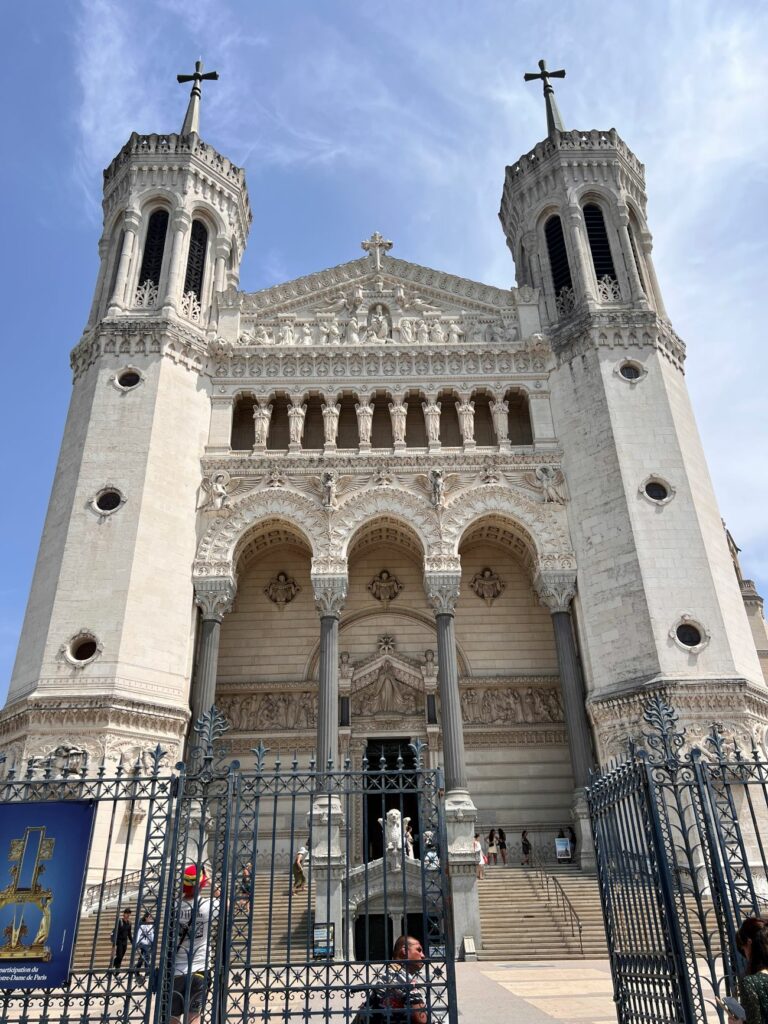
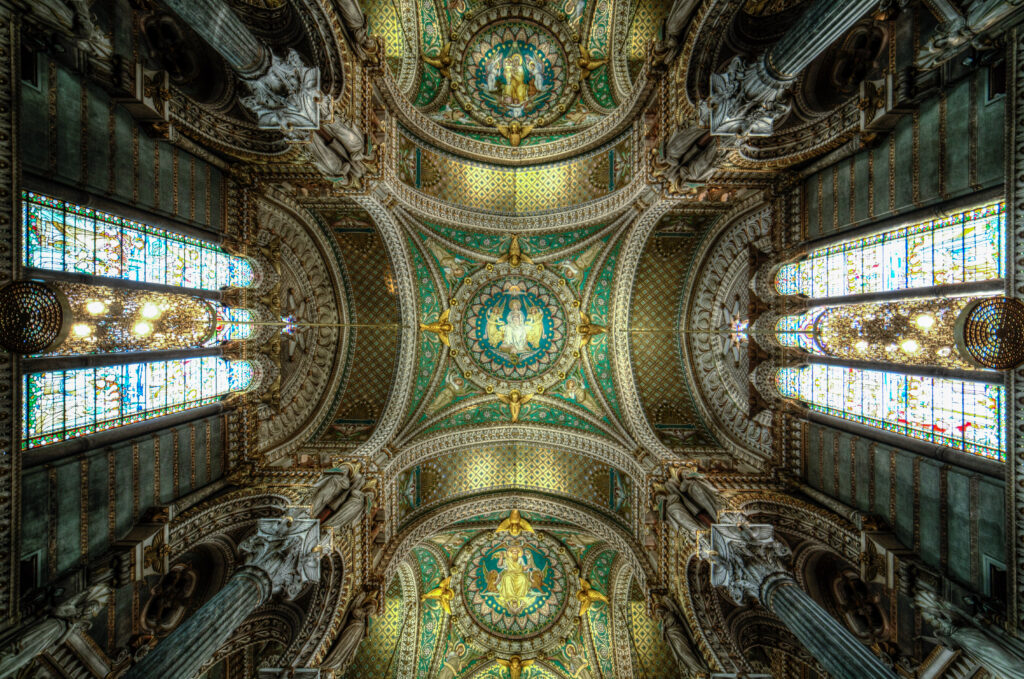
Lyon has been a UNESCO World Heritage site since 1998, and now a guided tour on the theme of ”2000 years of history” is on the agenda. Our guide, Claire Wicart, will take us up to Fouvière Hill – we'll take the funicular railway up the mountain. The journey is also included in our Lyon City Card. It is warm when we arrive at the magnificent Notre-Dame de Fourvière Basilica. The basilica towers 86 metres high. I spent a Palm Sunday here a few years ago. The mosaics are the focus, and we are treated to a stylistic meeting between the Byzantine and Gothic. From the height here, we get a fine panoramic view of the city, the two rivers Saône and Rhône, and the peninsula in between, La Presqu'île. We begin our walk down, along the road, then through a blooming garden. We end up at the amphitheatre, Théâtres Romains de Fourvière, built in 43 BC, which could seat 10,000 spectators at the time. The history is powerful and long. We have made our way down to Vieux Lyon, the old town here in Lyon. Cobblestone streets, pastel-coloured houses, and traboules – shortcuts between the houses which today are
part of the experience. Some of these ”shortcuts” are now open to the public, others are not. Some are signposted, others have their doors open – so take a moment, step inside and experience the world that the city's silk workers, who both lived and worked here, once inhabited. At one time, 30,000 silk weavers worked here in Lyon. Of the city's 1.4 million inhabitants, only 35 people are silk weavers today.
CORKS & BOCUSE
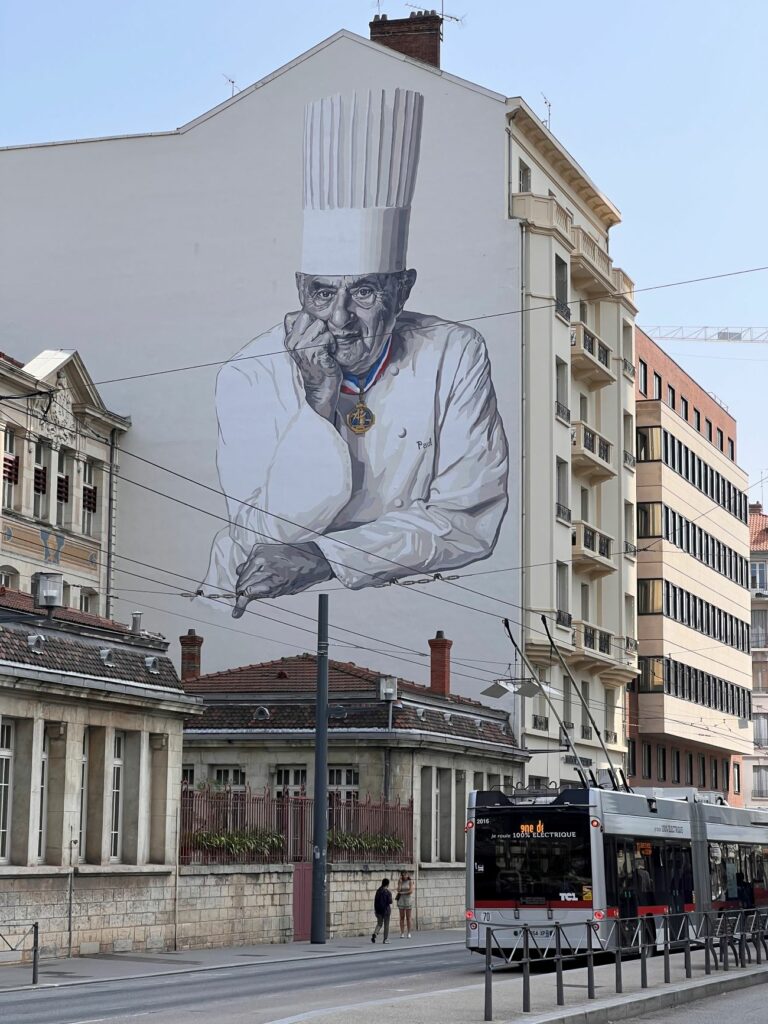
In Vieux Lyon, there are also many bouchons, traditional restaurants created by the so-called ”Mères Lyonnaises” (Lyonnaise Mothers), pioneering women who, in the 1930s, laid the foundations for Lyon becoming a gastronomic city. They served regional specialities, a concept that still endures today. It's also interesting that the city's number one culinary figure, Paul Bocuse, learned the tradition from these women, Mère Brazier. One tip for finding an authentic bouchon is to look for the sign ”Les Bouchons Lyonnais” on the door. A list of 22 excellent bouchons can be found on the tourist office's website. As a gastronomic city, Lyon is one of the largest and best-known in Sweden.
perhaps primarily for the annual prestigious cooking competition Bocuse d'Or.
Refill water source
It’s time to head back to the Hotel Roosevelt and check in. I top up my water bottle at reception before heading up to my room. Clever, I think. It turns out that the water fountain here is part of the #refillyourbottle scheme. There are 80,994 public fountains and 2,281 restaurants, bars and hotels in the city where you can fill your water bottle – the aim is to reduce plastic packaging and the transport of water.
Look out for the signs saying: ”Ici nous remplissons votre gourde!” and ”Here we fill your drinking bottle!”, and top up your bottle. The fact that our hotel also holds the ”Green Key” eco-label feels only natural as I reflect on my experience of Lyon.
MICHELIN STARS & MUSHROOM STEW
The restaurant Prairial, located in the Confluence district, is this evening's destination. We'll get there by tram, a journey that takes about 20 minutes. This area was formerly industrial, but is today a centre for innovation and sustainability. Our restaurant is on the ground floor of a newly built house and is run by chef Gaëtan Gentil and his wife Céline, who is in charge of the front of house. Prairial currently has both a regular
Michelin star and a Michelin Green Star for its strong sustainability efforts. We are served a 6-course tasting menu paired with secret drinks – they are only revealed when the food is cleared away. A fun concept, and it was a surprise that one of the drinks, which we thought was wine, turned out to be beer.
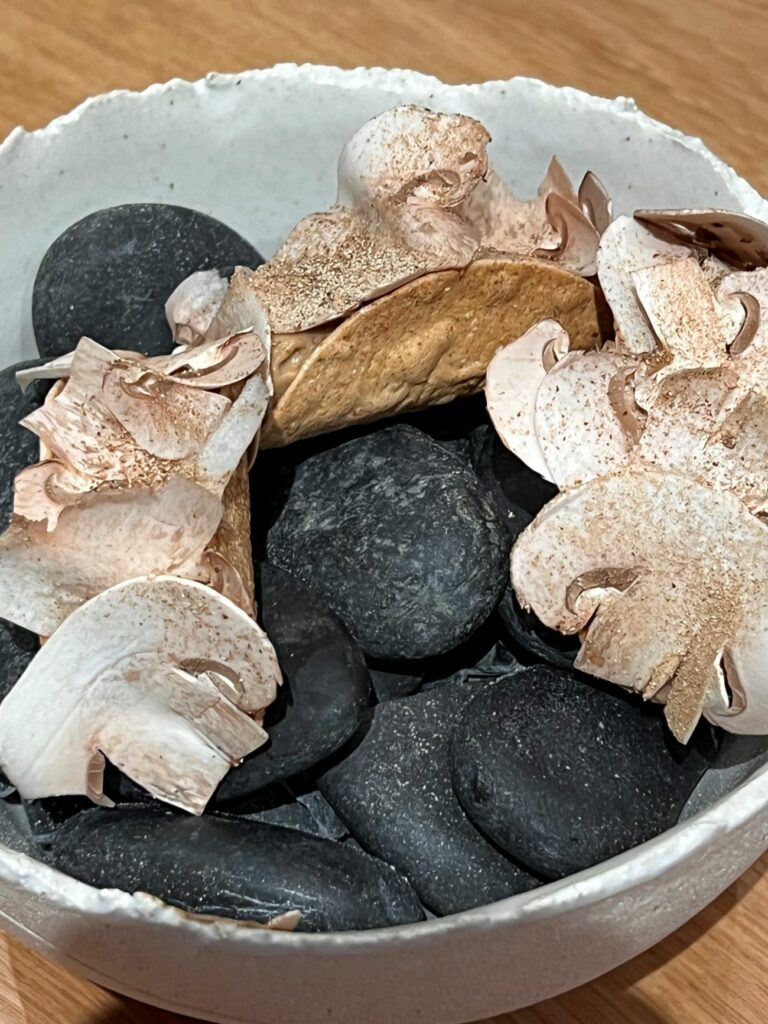
The restaurant kitchen is open and located in the centre of the premises, the tables are laid out as if we were at a performance. Which, in fact, we are. The performance is magical and my absolute favourite dish was the small taco-like delicacies filled with mushroom cream, served with sliced mushroom on top of a
bed of black stones.
THE CITY'S LUNGS
Today we have the opportunity to choose what we want to see and experience. Cycling is popular, so one member of our group downloads an app, books a bike, and sets off. There are plenty of cycle paths. A few of us choose to walk to Parc de la Tête d'Or, one of France's largest urban parks. The park, inaugurated in 1857 and designed by the Bühler brothers, covers 105 hectares. It boasts a magical mix of gardens, boat rental, and a rose garden. But above all, there are people here doing pretty much as they please. Two lads are boxing under a tree, many are running, many are walking, some are cycling, others are sitting on a park bench. This is truly a lung of the city, and a place where it would be easy to spend many hours enjoying yourself. We pass by a new project under the banner Chalet du Park, a place for sustainable gastronomy, culture, and education.
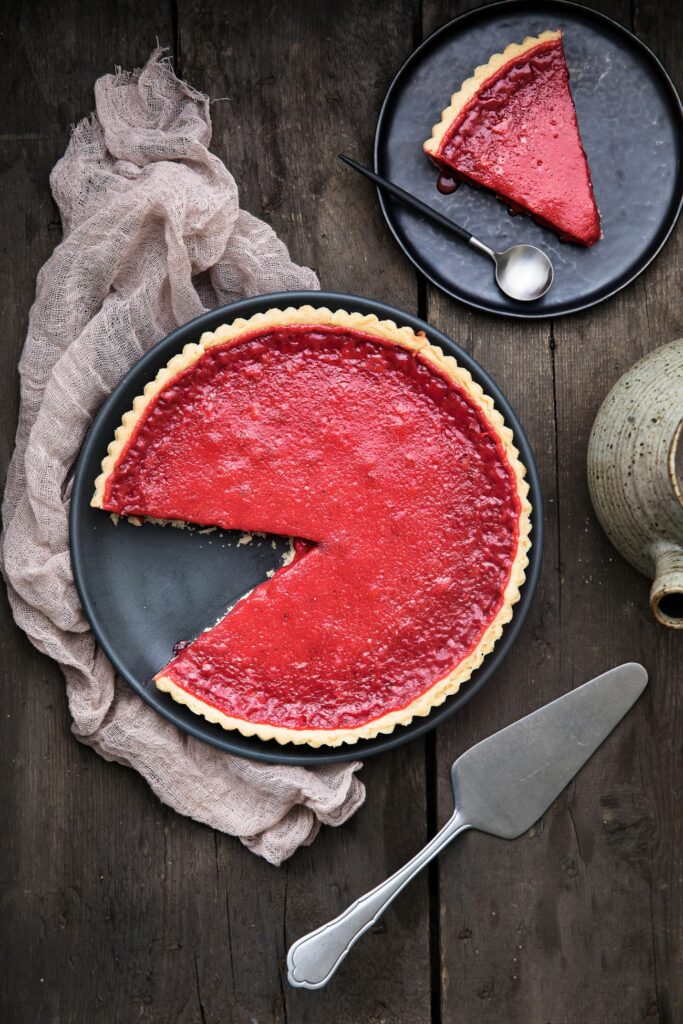
is taking shape. In Halle's Paul Bocuse, local produce such as charcuterie, cheese, wine, and vegetables beckon. We each have a slice of tarte à la praline and a cup of coffee before moving on. Perhaps a visit to the Musée
The Lumière brothers would have been right at home here – the two brothers from Lyon who pioneered cinema here 130 years ago are honoured in a variety of ways. This includes annual film events featuring new short films and a look back at the past. They filmed their first film, *Sortie des Usines* (*Workers Leaving the Factory*) from 1895, here, and it is exactly what the title suggests – workers leaving the factory.
A DRINK AT THE OPERA
After a long day, it’s lovely to settle down in the rooftop bar at the Opéra de Lyon with Mathilde Carpentier, director of promotion at the tourist office. She speaks with pride when she talks about her hometown. She explains that the city’s development has led to more pedestrianised streets and more cyclists, and that a further 355 kilometres of cycle paths will be added by 2030. In addition, local politicians are now working to include river commuter services on the standard bus pass. She explains that you can go kayaking on the river, do yoga on a SUP, and mentions a project for a swimming area by the river due to be completed in 2027. She then highlights the 15-minute concept.
A CALLABLE CITY
The 15-minute city is a concept formulated by Professor Carlos Moreno at the Sorbonne in Paris, and launched in 2015. It involves urban planning in which all essential amenities – such as workplaces, schools, healthcare, shopping and leisure activities – are located within a 15-minute radius of the home. The concept has attracted international attention in cities focused on sustainable urban development. Even as
For tourists, it is possible to apply the 15-minute concept
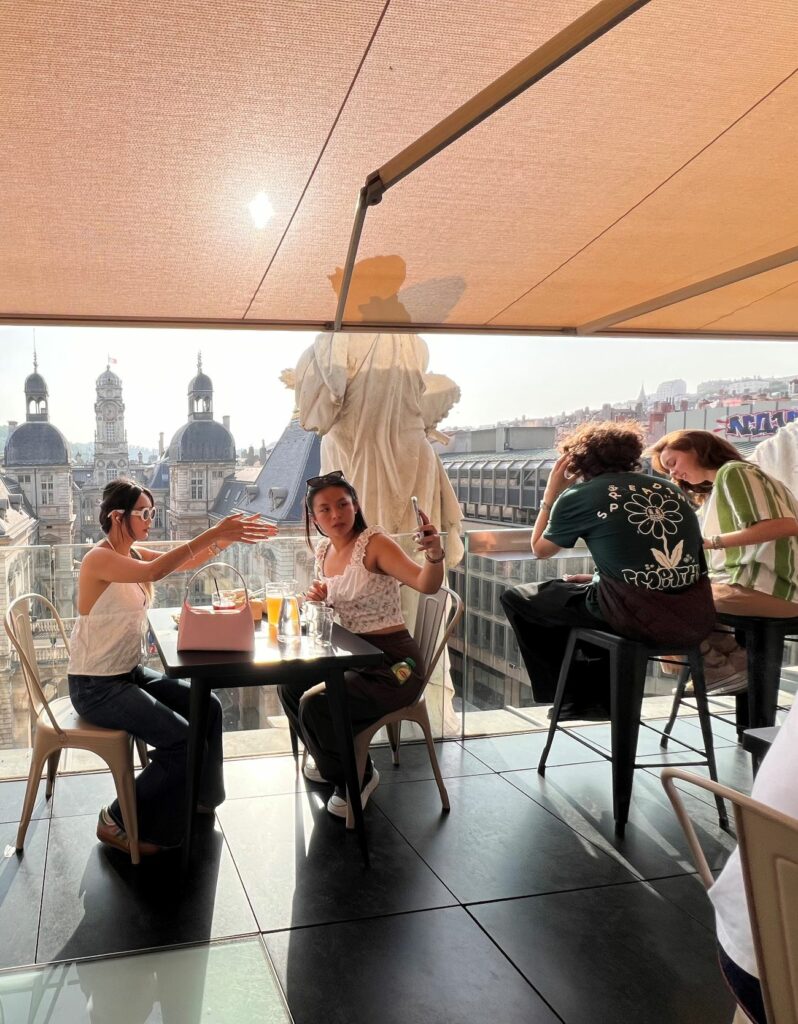
– which we've done during our days here. We've walked, used public transport, and cycled – though, it must be admitted, sometimes outside the time frame. It turns out Lyon was awarded the title of France's best 15-minute city by the newspaper Le Parisien last year. When we leave the rooftop bar atop the opera house, which in itself is an architecturally fun project where French architect Jean Nouvel added a greenhouse-like structure on top of the opera house that
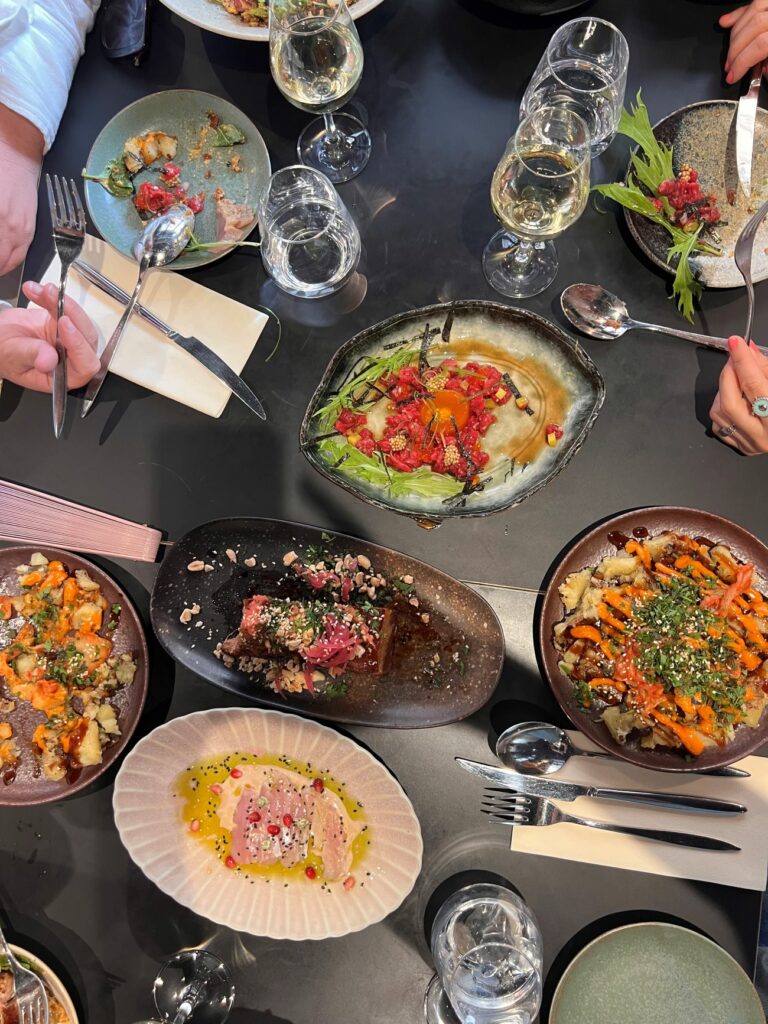
originally opened in 1831. I'm trying to take a picture of the view. But instead, I catch two girls fussing about to take a perfect selfie. I take a picture of them. On the way to tonight's restaurant Brume, we pass La Meunière – a Bouchon Lyonnais marked with a sticker, and one of Mathilde Carpentier's favourite spots. Dinner at Brume is served on a sharing concept. Smashed potatoes with kimchi and
Mayonnaise, steak tartare with egg yolk and slow-cooked pork belly are three of the delicacies that find their way onto our table. The ingredients come from nearby farms that prioritise organic and sustainable practices.
PERFECT LOCATION
It's time to move on. Lyon is perfectly located, especially for train travel. The journey to Paris is only 2 hours by high-speed train, and it takes 1 hour and 40 minutes down to Marseille. However, we will now take a detour to Beaujolais, learn a bit more about wine production, and visit the most beautiful of medieval villages – Oingt, before we board Norwegian's direct flight back to Stockholm.
Lyon Address
Brasserie des Roseaux. 34 Cours Franklin Roosevelt
@ brasserie.roseaux
www.brasserieroseaux.fr
Hotel Roosevelt
48, Rue de Sèze
3-star, 50 years old, now newly renovated and awarded a Green Key
www.hotel-roosevelt.com
Prairial
1 place Hubert Mounier
www.prairial-restaurant.fr
Opéra de Lyon
1, Place de la Comédie
www.opera-lyon.com/en
Brume
45, Rue de la Bourse
https://brume-restaurant.f
TIP!
Lyon City Card 1–4 days from 32–68 euros, slightly cheaper if purchased online, includes local transport, including the funicular up the mountain, museum entry, a guided tour with the Lyon Tourist Office, and plenty of discounts. Buy
Online or on-site.
More information about the card and the city: https://en.visiterlyon.com