
From any given moment, there are an infinite number of futures that can take shape. This means that we will never be able to predict the future with any greater precision. However, we can become better at preparing ourselves. Have we finally witnessed the death throes of futurology?
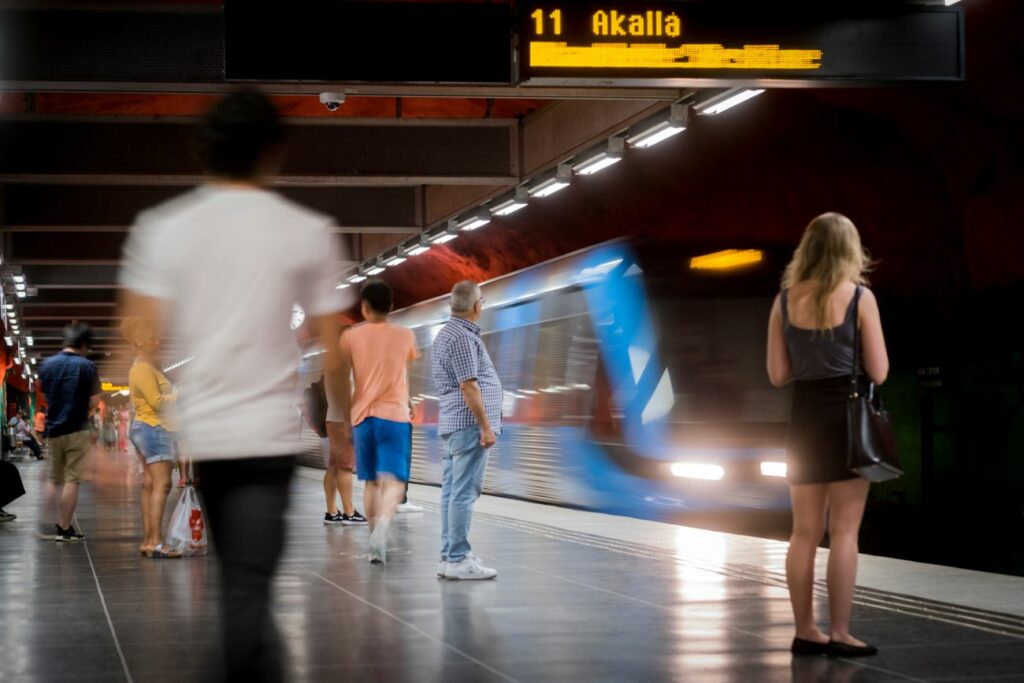
I am in northwestern Malaysia, on the island of Penang. Seven semesters of marketing studies have come to an end – we have studied four in Oslo, two in Singapore and a final one here at Universiti Sains Malaysia. From our campus a stone's throw away, we are awakened in the mornings by monotonous calls to prayer from the university's own mosque.
We are 28 students here from the Norwegian program in export marketing. The idea is that we will gain enough international experience to be able to return to Scandinavia and find employment in exporting companies.
But many of us are looking for openings in a global market that is teeming with telecom companies, e-commerce and internet opportunities. We have already lived abroad for 1.5 years, so the threshold for looking for a job in Hong Kong, London, Bangkok or New York is relatively low. The world is literally at our feet.
Half an hour later we meet the other exchange students to celebrate that we have just graduated. On the street food TV screens we see how two towers on the other side of the world collapse in smoke and dust. Big eyes. Hands in front of mouths. Gravöl instead of euphoric celebration. The world closes in real time, and the class of 2001 is largely allowed to start their careers with jobs in kindergartens, bars and call centers.
If 9/11 could have happened Predicted? In a way. The tensions that had been building for years culminated in an act as intricate as it was horrific. The attack did not come out of nowhere.
The incident fundamentally changed my life. Without a job or money, I had to move home and ended up in Stockholm. I struggled in a hopeless job market, started studying again, met my wife and started a family. We started our own company when the student loan ran out.
I think about this type of thing unreasonably often. Sliding Doors-moment. It could be the financial crisis, the pandemic, the Ukraine war, Iran. But it could also be about a red light that makes you miss the bus and instead hit
an old acquaintance who has an exciting project. The party you went to even though you didn't really have the energy. The text message that didn't go through. The grade in a subject that led to one school instead of another. The spontaneous sex that became a new life. The Scot in Sarajevo. The Scot who met JFK and Palme. The Scot who missed DJT.
Of course, there are always underlying currents that push the waves in a certain direction. But most breakpoints cannot
predicted.
Ten years ago then I became obsessed with the idea of the future.
In retrospect, I can see that it too began with a breaking point: our son’s heart stopped in the 39th week of pregnancy, just days before he was due to see the world. He was born naturally and was clothed. Then he lay with his eyes closed in a small box in our hospital room. We went home and packed the baby’s clothes into moving boxes. The flower delivery men came in a steady stream, but for the wrong reason.
Over time, the sadness eased. The fog began to clear. We had a healthy son the following year – a life that, quite frankly, would never have been lit if the other had not been extinguished.
But there is something unique about human resilience. Personally, I became less afraid of death. On the other hand, I became more invested in life. I wanted to do meaningful things, contribute to optimism and hope for the future.
The result was Heja Framtiden, a podcast where I began to highlight enthusiasts, solutions and inspiration. Already in my first episode, with economics professor Micael Dahlen, we joked about futurists' tendency to become more and more dramatic in their statements. The crazier the future predictions, the bigger the headlines.
But much did not go as planned, and today the futurists are conspicuous by their absence. With Trump and Putin at the helm, few now dare to look 20 years ahead – barely even three months at a time. The rhetoric has become increasingly clear: resilience is the most important thing of all.
The word, of course, basically means resilience, but the concept also encompasses adaptability, robustness, adjustment, learning, decentralization, flexibility, self-sufficiency, circularity and recovery.
Instead of fixed predictions, organizations and governments today are increasingly working with strategic foresight. They gather signals, patterns and macro trends into a framework that aims to carve out scenarios, often a whole palette of futures that can be made more or less tangible.
State innovation agency Vinnova has worked with strategic foresight since 2021 under the leadership of Joakim Skog - currently stationed in Silicon Valley to monitor developments in cutting-edge technologies.
− Foresight can be likened to climbing a tower and looking out over alternative futures. We horizon-scan and look for the small signals that can give us signs of what could become dominant. And when you have collected these signals, you create your future stories.
Joakim Skog emphasizes that it is not about a clear goal. Rather, it is about trying to build a compass and a time machine.
− It is important to practice for futures that may be radically different from today. When you get to do a ”time trip”, insights can be created that you would never otherwise have. Strategic foresight is about transforming these insights into strategic decisions.
Perhaps we are in a shift in our view of the possibility of predicting the future. Foresight and resilience are the most useful tools we have today. But we must hurry, because tomorrow it could be something else. When the next tipping point comes without warning.
CHRISTIAN VON ESSEN
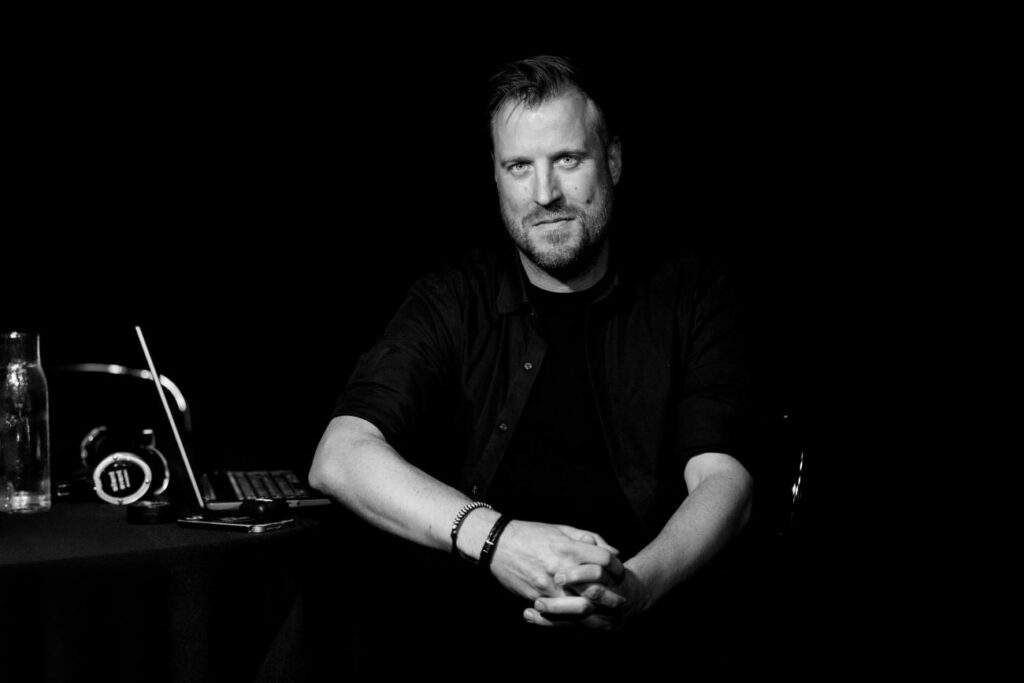
Christian von Essen runs Heja Framtiden, a podcast and platform for future issues. Since 2018, he has met with nearly 700 futurists, entrepreneurs, researchers and experts. Over the years, the podcast has become a
own media house, with book publishing, newsletters, lectures and events.
www.hejaframtiden.se
Scan the QR code to see more of Christian's projects.