



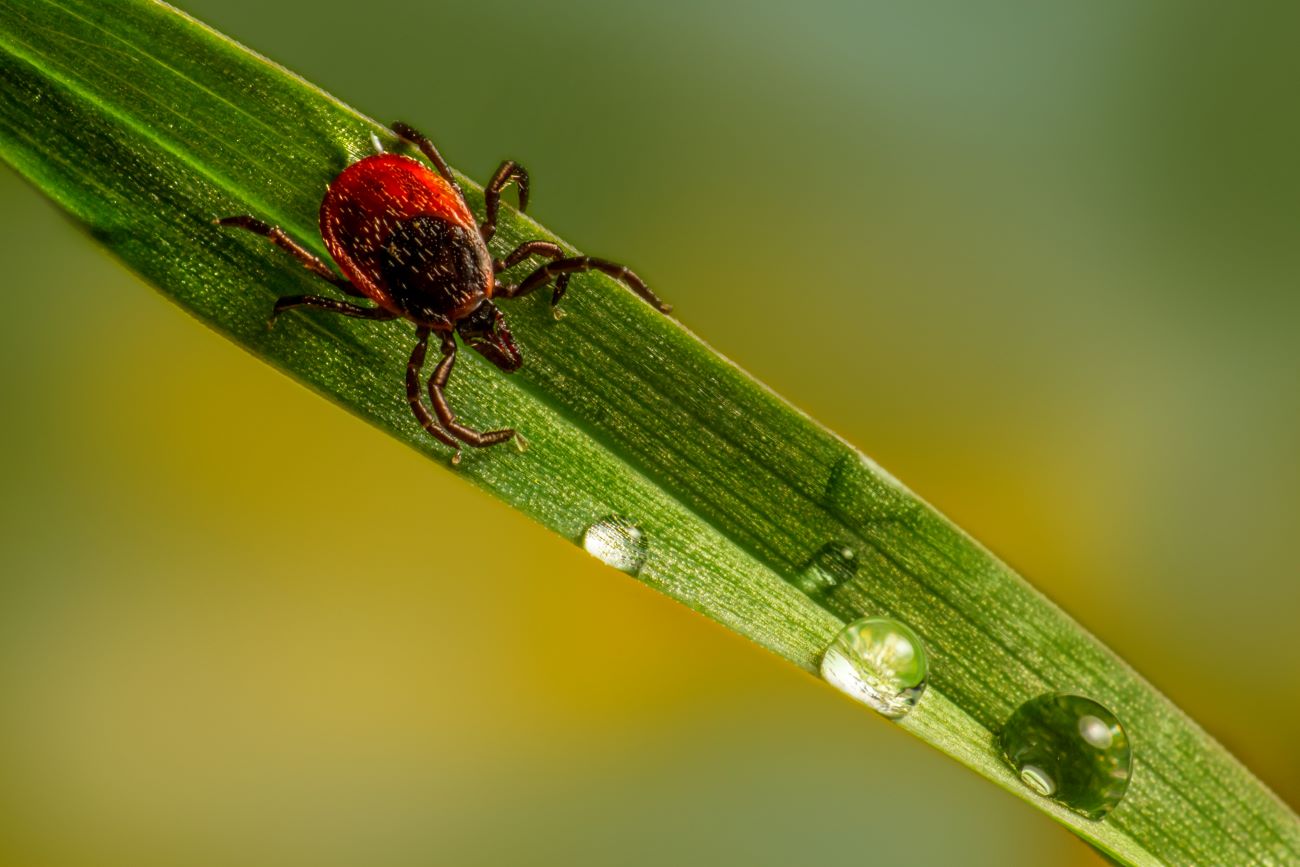
Ticks are becoming more numerous and more widespread. They are found in almost all of Sweden and are active all year round. Recently, researchers discovered that even tick larvae can infect us with viruses and parasites. In addition, new ticks are emerging as the climate changes and they can spread new diseases. You need to know this!

Our native ticks usually live a quiet life. They prefer to sit on a blade of grass and wait for a host animal to pass by. But the calm Swedish ticks have been joined by both larger and faster relatives. One of them is the hyalomma or migratory bird tick. It is almost twice the size of a regular Swedish tick and it moves as fast as a spider. It sounds like something out of a horror movie, but calm. Hyalomma only visits when the weather conditions are favorable in Sweden and, as far as we know, has not managed to reproduce in our harsh climate – yet.
“But considering climate change, it is a tick we are keeping an eye on,” says researcher Anna Omazic at the Swedish Veterinary Institute, SVA.
The migratory bird tick, as the name suggests, comes to Sweden with birds and prefers warm and dry conditions. It is sometimes called the giant tick because of its size and it usually bites larger animals such as cows and horses, but can also bite humans.
The same applies to the kennel tick and the spotted dog tick. They have established themselves in northern Germany, which has a climate similar to ours.
– Both species have been found sporadically in Sweden. We often bring them home from trips in Europe, for example when we have been traveling with a pet.

They can also accompany imported animals and smuggled dogs from Europe, says Anna Omazic. What makes the kennel tick so unpleasant is that, unlike many other tick species, it can survive indoors, for example in a dog bed, where it can lay a large number of eggs that hatch, quickly creating a large number of ticks in the home.
– There can quickly be a huge spread of ticks indoors if you bring them home. And that has actually already happened in Sweden.
Kennel ticks can carry the infectious agent Babesia canis, which can cause serious illness in dogs if they do not receive veterinary treatment in time. However, healthy people rarely become seriously ill.
In the summer of 2024, researchers at the Swedish Veterinary Institute also discovered a completely new tick species in the Stockholm area. In Swedish, it is called the motley sheep tick and it can carry several different infectious agents, such as the Crimean-Congo hemorrhagic fever virus. Fortunately, the tick found did not carry the virus this time, but the ticks' spread is worrying experts.
Another tick species that has increased in number is the so-called taiga tick, which has come to Sweden with migratory birds and mammals from Russia.
– It is mainly found along the coast in Norrbotten and can carry a more serious form of the TBE virus, says Anna Omazic.
The taiga tick TBE virus has a higher mortality rate than we have in Sweden. In some cases, the mortality rate has been 30 percent among those who have fallen ill. The TBE that is spread by Swedish ticks has a mortality rate of around 1 percent. The TBE vaccine used in Sweden also helps against the more dangerous TBE infection.
Previously, it was believed that tick larvae were harmless to humans. However, last summer, research from a study at Södertörn University showed that the larvae can actually infect humans with both Lyme disease and Babesia (see fact box). However, the risk of being infected by a tick larva is lower compared to an adult tick, and it is unclear whether the larvae can also transmit TBE infection.
Today, only the mountain areas in Sweden are protected from ticks. In other parts of the country, our common tick is becoming more and more numerous, both in terms of number and distribution.
– We have seen a kind of shift where ticks can now be active year-round, mainly in southern and central Sweden, but we have also received occasional reports from northern Sweden in winter. This may be due to the effects of climate change, with milder winters and less snow cover in large parts of the country.
Anna Omazic also says that the ticks have started to find their way out of the forest:
“They are found in all environments where we have wild animals. You can meet them on your property or in a park,” she says.
If you live in an area where you usually see deer, hares and rodents, there is a high probability that there are also ticks there.
– We need to increase our awareness that they can now be found in places other than just forests and land.
If you have been outside, you should therefore get into the habit of checking your body for insects afterwards, even on your pets.
– If you have been bitten by a tick, you should remove it as quickly as possible. When it comes to the Lyme disease bacteria, the tick only transmits it after about 24 hours, says Anna Omazic.
If the tick carries the TBE virus, it is transmitted directly at the bite as the virus is in the tick's saliva. Even if the number of ticks increases, there is no need to panic and stop moving around in nature. Not all ticks carry infectious agents and even if they carry the Lyme disease bacteria or TBE virus, not all people become infected and become seriously ill.
–Approximately 15 to 20 percent of all ticks carry the Lyme disease bacteria, and when it comes to the TBE virus, the figure is around one percent, says Anna Omazic.
HOW TO PROTECT YOURSELF
Check your body after you have been outside. Ticks often wander around for several hours before attaching themselves.
Good clothes
- Long sleeve.
- Long pants and socks.
- Full-coverage shoes, preferably boots with high shafts.
- Avoid fur, fleece and flannel as ticks can easily get a hold of them. Silky, smooth fabrics are too ”slippery” for ticks.
- Dark clothing attracts fewer ticks than light clothing, but ticks are easier to spot on light clothing.
Remove the tick at once
It is important to remove the tick as soon as possible.
Do this:
- Use tick tweezers or tick remover.
- Pull the tick straight out.
- Wash with soap and water or disinfectant.
5 TICK-BORNE DISEASES IN SWEDEN
TBE
TBE, or tick-borne encephalitis, is caused by a virus. Common symptoms include headache, muscle aches, and fatigue. In more severe cases, fever, vomiting, sensitivity to light and sound, and confusion may occur. There is no treatment for TBE, but symptoms can be managed.
Lyme disease
A tick-borne bacterial infection that usually causes a rash, a growing red ring or spot. It can spread to the joints and nervous system. The skin redness at the site of the tick bite appears one to four weeks after you have been bitten. The redness grows and becomes larger than five centimeters in diameter. If the disease spreads to the joints, the symptoms are swelling in one or more joints, most commonly the knee joint. The swelling lasts between a few days and a couple of weeks. The disease is treated with antibiotics.
Babesia
Babesia is a blood parasite that is most contagious when the tick has sucked blood and begins to feel full and vomit. Common symptoms are flu-like symptoms with fever, body aches and headaches. The disease can also cause dark urine. If you have a weakened immune system or lack a spleen, the parasite can cause life-threatening illness. Babesia is treated with malaria medication and antibiotics.
Rickettsios
The bacteria rickettsia can cause a number of diseases, such as spotted fever. Early symptoms of rickettsiosis are fever,
headache and muscle pain and skin rash. Sometimes a black ulcer appears at the bite site. Rickettsiosis is treated with
antibiotics.
Tick-borne fever (anaplasmosis)
The disease is caused by a bacteria that infects the white blood cells. Common symptoms include fever, chills, headache, muscle aches, and a general feeling of illness. In most cases, the infection clears up on its own within a couple of weeks. It can also be treated with antibiotics.
Sources: Public Health Agency of Sweden, 1177, Din Dokto