



What does Swedish everyday life look like if we push today's trends to their most absurd logical conclusion? In 2049, preschool chats are friction-free, laundry apps are machine-written, and food receipts are tiny oracles. Let's offer some ridiculously sensible future predictions.
You often buy ice cream around 9 PM on Fridays. This statistically coincides with relationship stress. Try discussing expectations earlier in the day.
The communal house's chatbot that everyone talks to but no one wants to admit
By 2049, almost all municipalities have their own AI coordinator who receives complaints, requests, and suggestions. They respond politely, accurately, and without irritation, making them immensely popular. So popular that civil servants have noticed that citizens are avoiding calling people. People are afraid of being perceived as bothersome.,
With AI, you can upload as much as you want. The result: a form of digital undergrowth of long, emotional monologues about parking zones, streetlights and ”that neighbour”. No one in the municipality has time to read it all, but everyone knows it's there. A sort of collective diary against the machine.
Probability according to trend analyst Nicklas Hermansson: – 92 %. People have always been lonely and self-absorbed. I realised this in 2004 when I was working the night shift as a reporter at Aftonbladet and acting as a human chatbot for the loneliest readers who rang in to say everything and nothing. Who I was didn’t matter
...for as long as I said what they wanted to hear. Today, two decades later, we are more open towards machines than towards people. And that's not surprising. The machine doesn't judge. And it neither sighs nor looks at the clock. In fact, one of the chatbot's primary tasks is to act as a psychologist – and development is hardly likely to stop there.
2. PRESCHOOL CHAT 2.0, WHERE EVERYTHING IS GROUND DOWN TO WILLFUL NONSENSE In 2049, all messages are filtered automatically. Every potential conflict is ironed out before it leaves the mobile. The chats are extremely friendly. Too friendly. Parents no longer know their children. Everyone says the same thing. The real discussions take place in small, secret SMS groups on the side, where the tone is rawer, more honest, and more human. The strange thing is that no one dares to bring it up. As if it were embarrassing to admit that one longs for a normal, honest disgruntled sigh.
Probability according to trend analyst Nicklas Hermansson: – 25 %. We’re already there mentally. On official channels, we’re all ”Baghdad Bob”. We polish our public image so much that even our closest friends would barely recognise us. But I think we’re going to see a backlash. When everything becomes AI-polished and frictionless, the rough-edged and authentic will become the trend. By 2049, we’ll have realised that it’s friction that drives the world – and our relationships – forward. The polished chats will still be around, but by then they’ll mainly be about one-way communication.
3. THE STAIRWELL RUG WRITTEN BY A MACHINE AND IS MUCH, MUCH ANGRIER
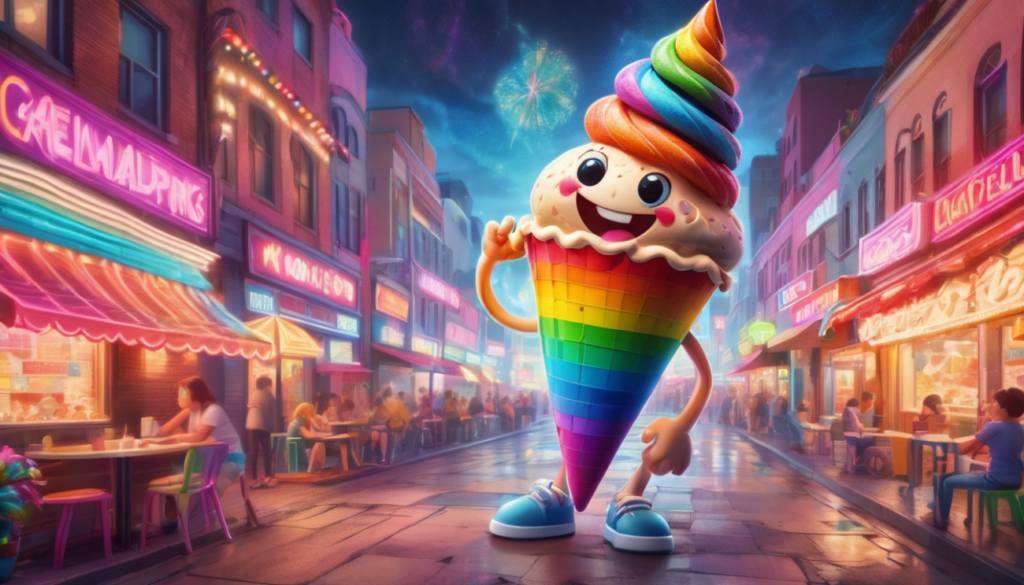
In 2049, many landlords have automated notice systems connected to sensors in the laundry room.
It starts with something innocent: ”Remember to empty the lint filter.” But systems learn which formulations get the fastest response, which happen to be those that sound most moralising.
The tone becomes unexpectedly sharp. Not because anyone is actually angry, but because the system has discovered that people respond faster when the note sounds stern. Housing companies are now trying to ”tone down” their AI-generated notes. Tenants have started putting up real handwritten notes next to them, as a form of digital resistance: ”We're behaving, thank you.”
Probability according to trend analyst Nicklas Hermansson: – 5 percent. That sounds like a brilliant idea, if it weren’t for capitalism. An AI that scolds tenants is bad business. Housing companies want satisfied customers and to build their brand. The last thing they want is conflict. And since we humans perceive communication so differently, the notes are like Russian roulette. However, there is a great risk that we will see manipulative and passive-aggressive note-bots in the future: ”Most of your neighbours tidy up after themselves, do you want to belong to the community too?”.

4. THE SPRING VISIT WHERE THE AI MANAGES TO MAKE A DIAGNOSIS BEFORE THE GREETING
2049, it is standard for AI to make the initial assessment when you seek medical care. The systems read tone of voice, movement patterns, blood circulation in the face, and micro-changes in pupils. Before the patient sits down, the system has delivered a preliminary diagnosis, a treatment plan, and a risk profile. The doctor has become a sort of moderator between body, machine, and human. Patients describe the appointments as short, precise, and strangely predictable. The human conversation often becomes more important than the treatment. That is why the waiting times
for ”talk time” is longer than for sampling Probability according to trend forecaster Nicklas
Hermansson: – 85 percent. The development of sensors is happening at lightning speed, so the challenge here isn't the technology
– without the ethics. Do we want to be monitored wherever we go? Where do we draw the line on what we're willing to share? At the same time: as waiting lists for healthcare grow, pragmatism will override privacy. Do you want to wait four months for a stressed doctor or four seconds for an AI analysis? Most of us will sell our privacy to get quick help.”
5. THE RECEIPT THAT BECAME A RELATIONSHIP COUNSELLOR
In 2049, food chains are using AI analysis of receipts as a service: households receive monthly reports intended to ”facilitate planning and well-being”. The idea is good, but the reports quickly become more philosophical than practical: ”You often buy ice cream at 9 PM on Fridays. This statistically coincides with relationship stress. Try discussing expectations earlier in the day.” Initially, people laugh at this. Then, some start to follow the advice. And when the algorithm has been correct a few too many times, a new anxiety arises: what if the receipt sees more of us than we do ourselves?
Probability according to trend analyst Nicklas Hermansson: ”– 42 percent. Grocery stores have all the data they need to nominate you for Parent of the Year – or to send you to prison. But will they dare to use the information fully? The risk of offending customers is high. ”You like ice cream” is one thing, ”You have relationship problems' is quite another. And do you really want a discount on carrots if you're told you're buying too much processed food? At the same time: ICA won't give you relationship advice just to be"
kindly, but because they cooperate with your insurance company. If you buy too much pizza and ice cream, your insurance will become more expensive.